
Recently, I went on a trip to the Jim Corbett National Park. Although I have visited numerous times before and stayed in the resorts dotting the park’s periphery, I had long yearned for a different experience. This time, I chose to stay inside the park itself—where nature thrives, tigers roar, birds flutter, the shrill calls of the cicadas, blend seamlessly with the profound silence that defines the everyday life here.
The history of this park and the zones

Before delving into my personal experience, let’s explore the history of this park and how it is divided into different zones, each offering unique landscapes and wildlife experiences. This region was ruled by the princely state of Garhwal until about 1803, when the Gurkhas took over the Garhwal region and ruled for roughly 12 years. The Gurkha war (Anglo – Nepalese war) started in 1814 and continued until 1816 with the signing of the treaty of Sagauli. The Raja of Tehri (princely state) gave away this area (in fact the larger Pauri region, east of Alaknanda River or east-Garhwal) to the East India Company and later on it became part of the British crown along with Kumaon and Dehradun regions. This area was called Patli Dun (name given to the grasslands or chaurs lying on both sides of the Ramganga river) during that time. In the 1850s, with the advent of the Railways which required enormous amount of timber for making railway sleepers, reckless felling of trees took place in the area. The area also saw uncontrolled cattle grazing, organized farming, forest fires, which became a threat to the Sal trees. Sir Henry Ramsay (the then Commissioner of Kumaon) implemented the 1st structured conservation plan for the forest in about 1858. His efforts are truly commendable in this regard. He banned farming in the Patlidun valley, removed cattle sheds, and created a dedicated workforce to address illegal logging and forest fires. He even introduced timber licenses and systematic tree monitoring, significantly improving forest conditions.

This groundwork eventually helped later when the area was declared a reserved forest in 1879. Eventually, in 1936, the area was declared as the country’s 1st national park, named as Hailey National Park, who was a Governor of United Provinces (now Uttar Pradesh). After independence, the name was changed to Ramganga National Park in 1954 and eventually it took its current name ‘Jim Corbett National Park’ in the year 1957. The park is also the country’s 1st Tiger Reserve (Corbett Tiger Reserve – CTR), where project tiger was launched on 1st April 1973.
Various Zones of Corbett Tiger Reserve (CTR)
CTR is spread across a vast area (roughly 1288 sq km) with abudance of flora and fauna forming part of it. It consists of 2 protected areas:
Corbett National Park (521 sq km)Sonanadi Wildlife Sanctuary (301 sq km)The remaining forest reserve serves as a buffer area
CTR is divided into 8 unique tourism zones. These include Jhirna, Dhela, Bijrani, Dhikala, Durgadevi, Sonanadi, Pakhro and Garjia. Except Sonanadi and Pakhro zones which are accessible from Kotdwar side (district Pauri), Ramnagar serves as the entry point for all the other zones. Refer to the Govt’s dedicated website for more information on the zones, visit timings and other details (click here)
What makes the Dhikala Zone of Corbett Tiger Reserve so unique?

While every zone offers abundant wildlife, Dhikala has earned a special reputation. It is a sought-after destination among enthusiasts, many of whom return to this sanctuary multiple times a year.
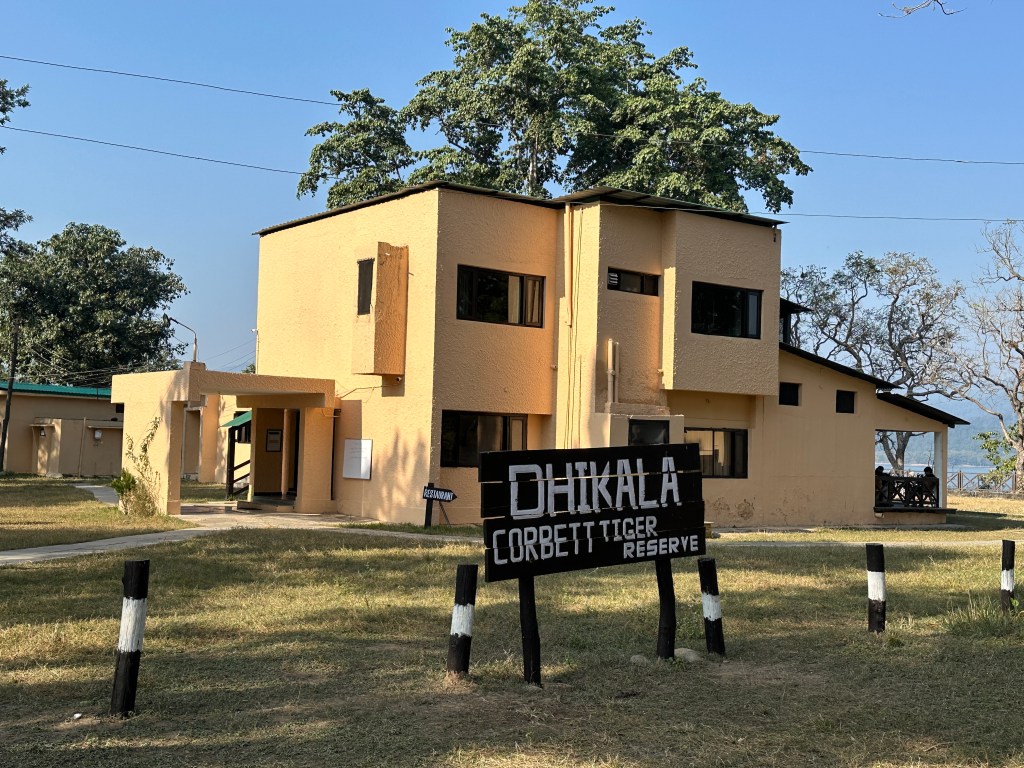
Unique value proposition of Dhikala Zone | Key Highlights
- Scenic Drive: The journey to the Dhikala Forest Rest House (FRH) is an adventurous safari in itself, covering 31 km from the Dhangari Gate. The drive passes through dense forests teeming with wildlife activity, offering a captivating prelude to your stay
- Breathtaking views from the FRH: The FRH overlooks a vast reservoir formed by the Ramganga River, flanked by lush green hills stretching into the horizon, creating a picture-perfect setting
- Close proximity to the Tiger Habitats: The tiger habitats are very close to the FRH premises, adding a thrilling element to one’s stay. Visitors to Dhikala have a high chance of spotting these majestic creatures
- Dining Convenience: Unlike a few other FRHs where visitors must bring their own food, Dhikala FRH features a functional restaurant serving meals
- Numerous stay options: The FRH offers various accommodations, including dormitories and the historic “Old Dhikala FRH,” built in the 1890s. However, its difficult to secure an accommodation here given the massive demand from visitors
- Other facilities in the premises: Guests can explore a library on-site, housing a rich collection of books and journals related to Corbett’s wildlife and history. The amphitheater within the premises hosts a daily evening movie, providing insights into Corbett’s history, its vibrant flora, and fauna
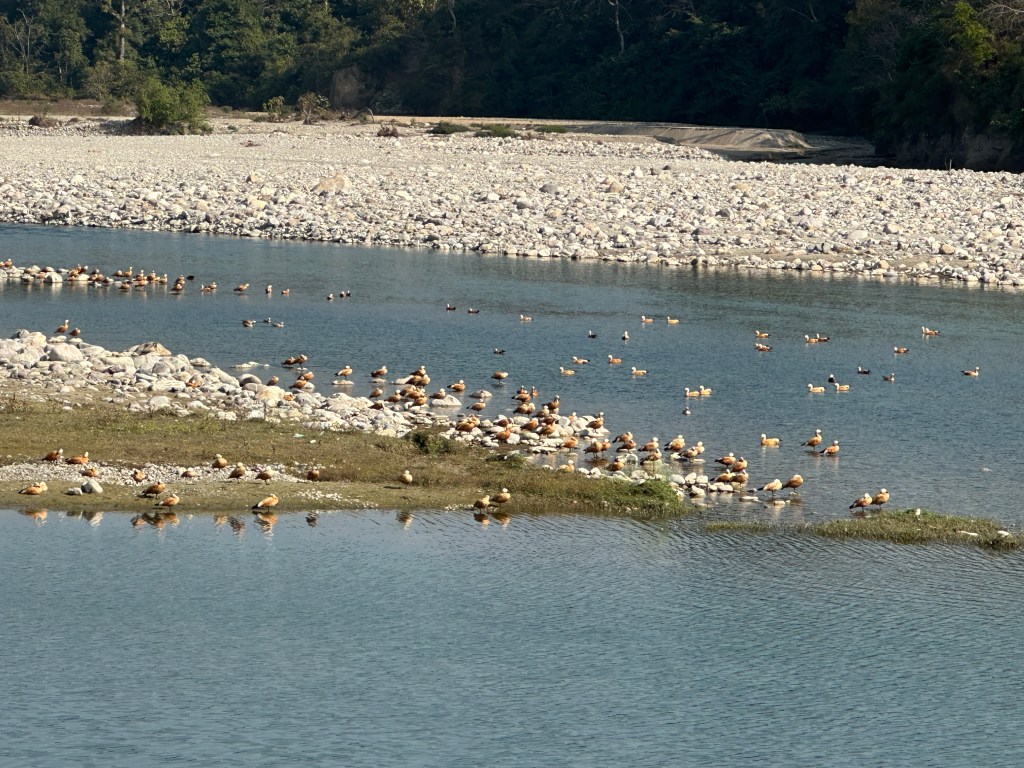
On a bright and sunny early December morning, we set off from Haldwani towards Ramnagar. The hills accompanied us on one side, their lush greenery glowing vividly in the warm sunlight. We crossed Kaladhungi, home to the Corbett Museum, where the famous conservationist Jim Corbett once resided. The morning air was crisp and cold but pleasantly manageable. At the Ramnagar barrage (dam), we were greeted by an incredible sight of numerous avian creatures perched on the stones scattered across the Kosi River. Among them, the resident Cormorants and the striking Ruddy Shelduck, a migratory species, were a delight to observe.
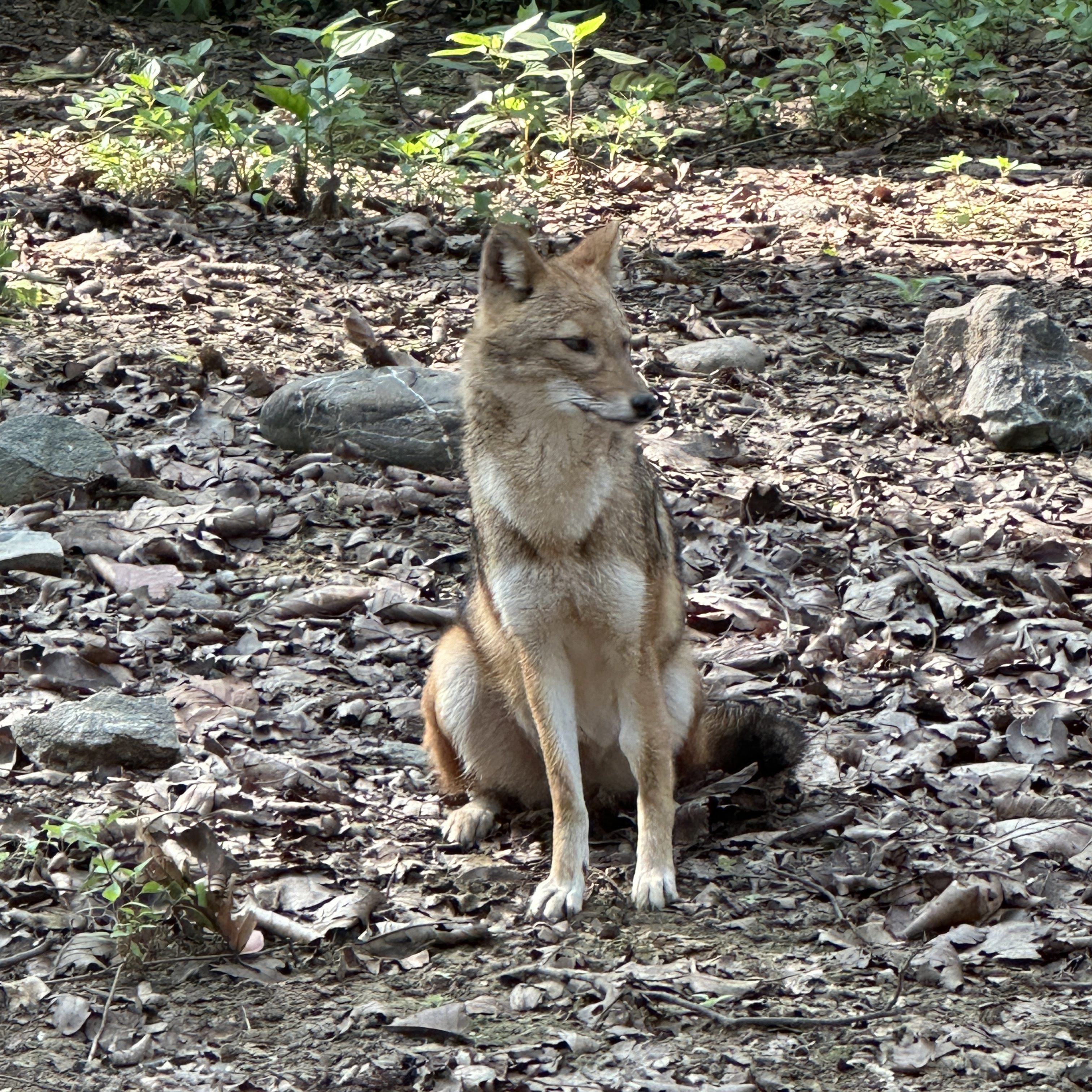
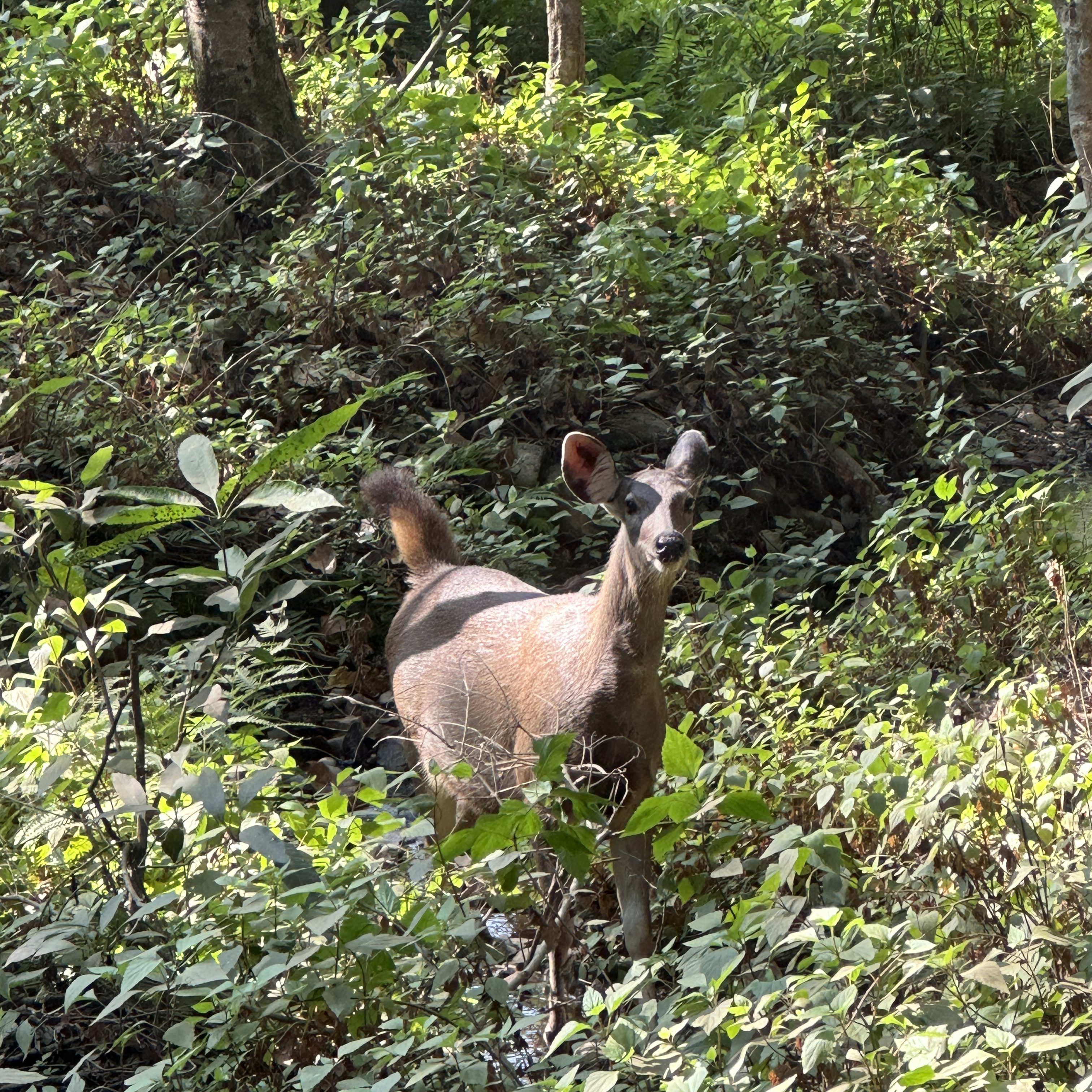
We had booked a stay at the Dhikala FRH and needed to reach Dhangari Gate, the entry point to the Dhikala Zone, by 12 noon. After parking our vehicle, we hopped into an open gypsy and set off for the forest wonders, following a quick check of our booking reservation and luggage at the gate. The forest track was bumpy but manageable, and we soon found ourselves surrounded by the tranquil embrace of dense Sal trees scattered all around. Along the way, we spotted sambar, barking deer, spotted deer, wild boars, and even a Jackal, while the musical calls of numerous bird species provided a comforting soundtrack to the journey.

The silence was profound as we arrived at the Dhikala FRH. After checking into our room, we headed straight to the restaurant for a quick lunch. Eager to begin our first safari, we wanted to make the most of our time exploring the dense forests and testing our luck at spotting wildlife—especially the elusive big cat.
Safari routes in the Dhikala Zone
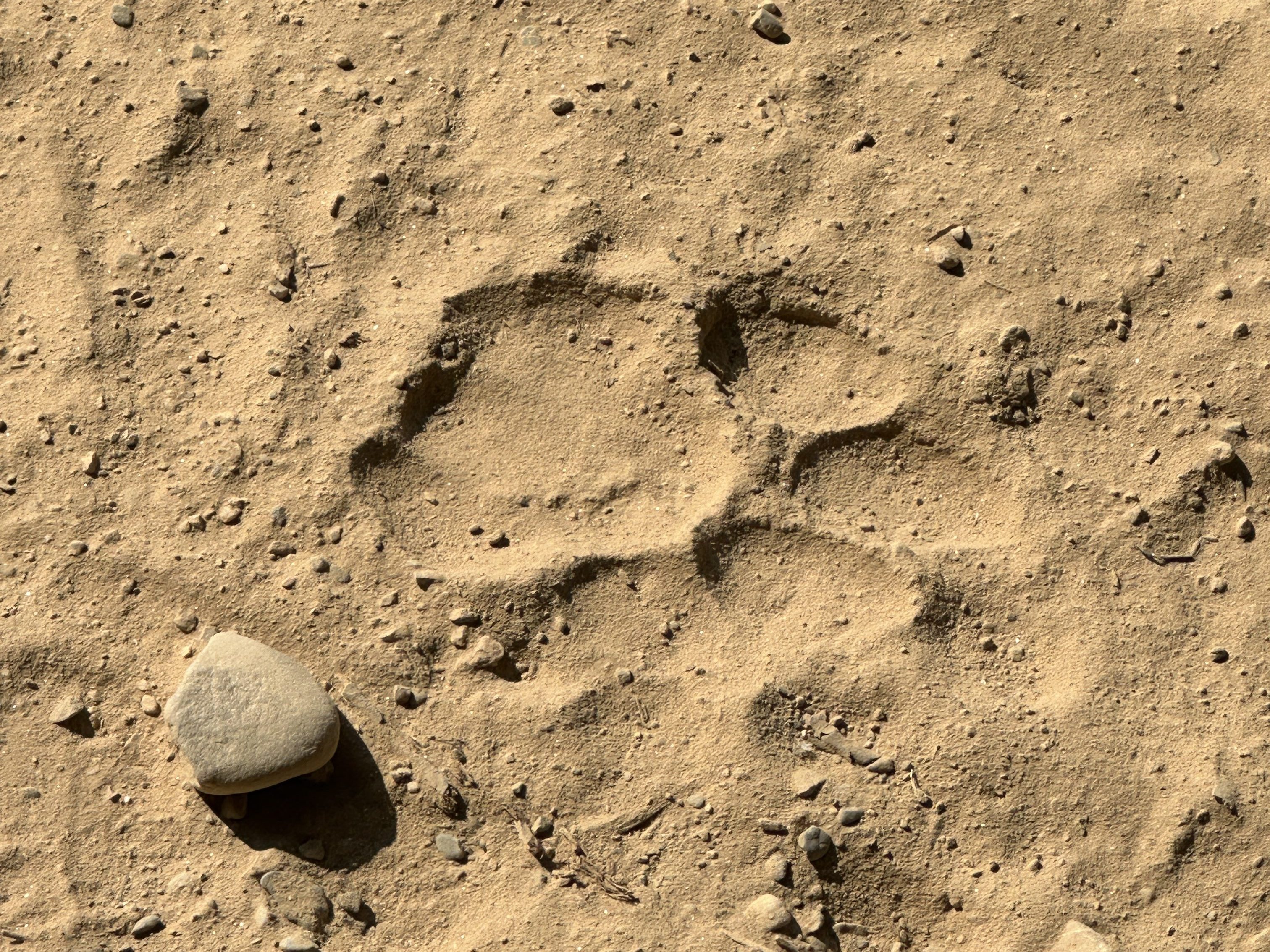

The park has numerous designated tracks where vehicles are allowed to ply. Around Dhikala FRH, these routes include Dhikala Chaur, Thandi Sadak, Car road, Sambar Road, Kamarpatta road, Ramsingh road, Champion road, and others. At the far end of Thandi Sadak, we were delighted to spot a herd of Asiatic elephants up close – a truly mesmerizing experience. While we heard a few alarm calls, indicating the presence of a tiger nearby, luck wasn’t on our side for a sighting .By 5:30 PM, all vehicles are required to return to the Dhikala FRH. As darkness was overpowering the fading light of the day, we felt a dash of disappointment at not having spotted any tigers. Nevertheless, we stayed hopeful, for a surprise on the next day’s morning safari.
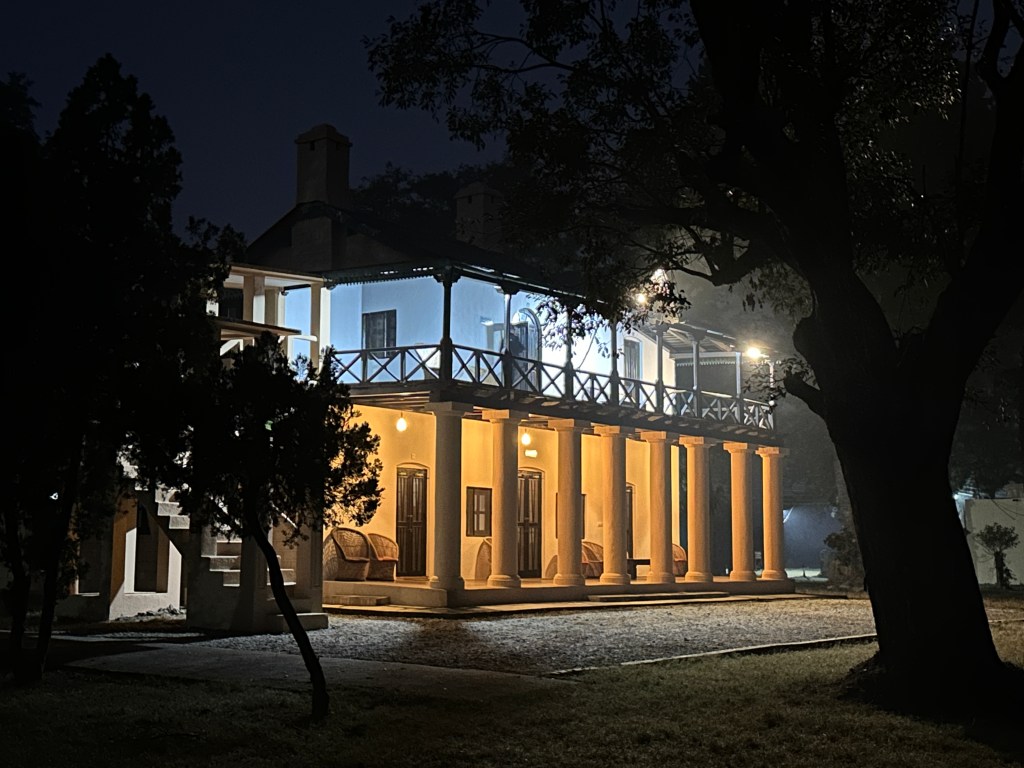
Despite buzzing with human activity, there was a peculiar silence around, and the night felt heavy. It had been a hectic day, so we retired to bed early, perfectly in sync with nature’s rhythm here. But wait—this is when tigers become active, roaming endlessly in the territory they call home.


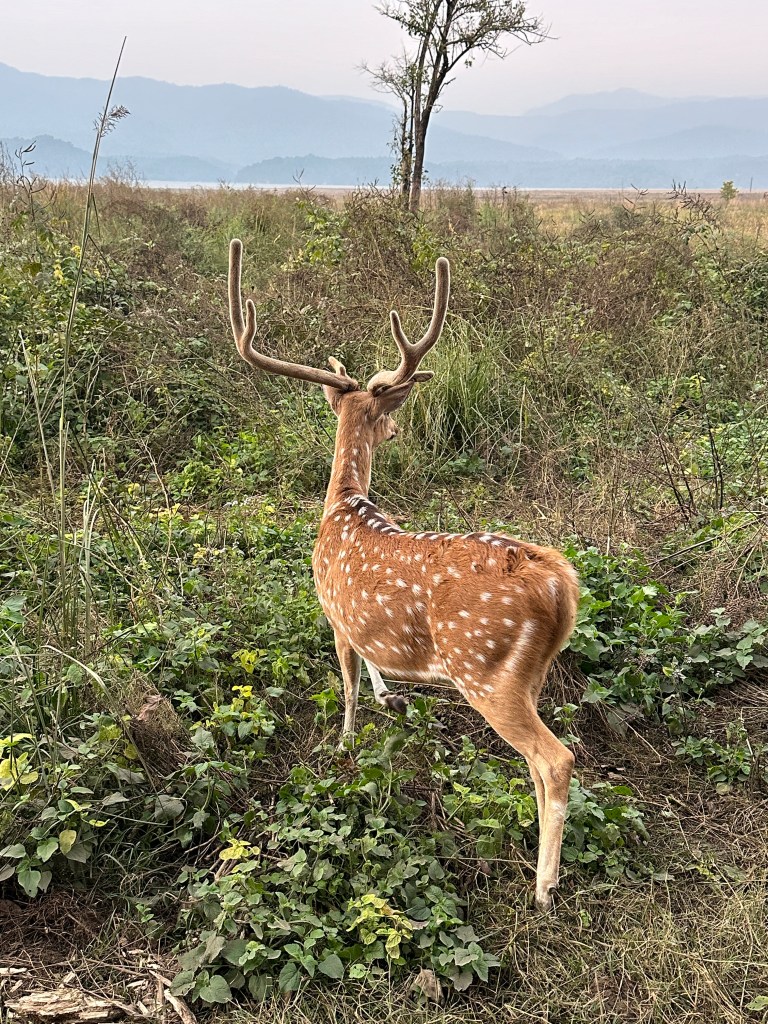
It was still dark, and the mist had descended heavily when we were up and ready for our second safari (at 06:30 AM). Within 15 minutes, we spotted the big cat (on the Thandi Sadak) as it crossed the track from one side to the other. We relished the fleeting glance of the tiger before it disappeared into the thick bushes, merging with nature’s colors and obscuring our view. We were content. Our safari continued along the same routes, trying to explore other animals and not giving up on the chance to spot the other tigers—namely Pedwali and her cubs, and Parwali and her cubs—who rule clearly demarcated areas.

And so, we concluded our short but fascinating one-day trip to Jim Corbett National Park. I hope you enjoyed this journey with me!
Planning a trip to Jim Corbett | Helpful Pointers
| Location of Dhangari Gate | https://maps.app.goo.gl/chfpoXxENp8gKLE47 |
| Where can I book my stay (for Dhikala Zone) | https://corbettgov.org/ you can check the booking schedule on the website. Kindly book well in advance, as Dhikala is a sought-after location. |
| Other stay options in the Dhikala Zone | Yes, apart from the Dhikala FRH, there are three other FRHs in this zone that you can consider: Sultan FRHGairal FRHSarpduli FRH There is also another guest house, the Khinnanauli FRH, but this is a VVIP guest house and is not available for booking through the official website. |
| Best time to visit | Park is closed during the monsoon season. You can check the timings on the official website. |
| Day safari is also possible in Dhikala? | Only if you take a canter. Jeep safaris are available only for those who have a confirmed stay at any of the FRHs inside the Dhikala Zone. |
| How to book your stay | Bookings open 45 days in advance at 10 AM. If successful, a vehicle (gypsy) is automatically allocated 3 days prior to your stay. If you prefer a specific vehicle, such as one driven by a known driver, the website allows you to reserve it in advance. |
| What else to do around? | Visit the Corbett Interpretation centre (museum) located at the Dhangari GateVisit the famous Garjiya Devi temple (I have written a dedicated post on this temple earlier. Click here to visit the page) |
 Travel diaries from Uttarakhand
nicely elaborated the beauty of CTR, we had also visited this reserve a long back …
👍👍
LikeLiked by 1 person