This year hadn’t been much of a hiking year for me. Not that I lived an inactive lifestyle , but perhaps I got sunk in the daily rhythms of life. So when I saw a small window of opportunity to do a short hike, I grabbed it. And this one had been on my mind for a very long time.
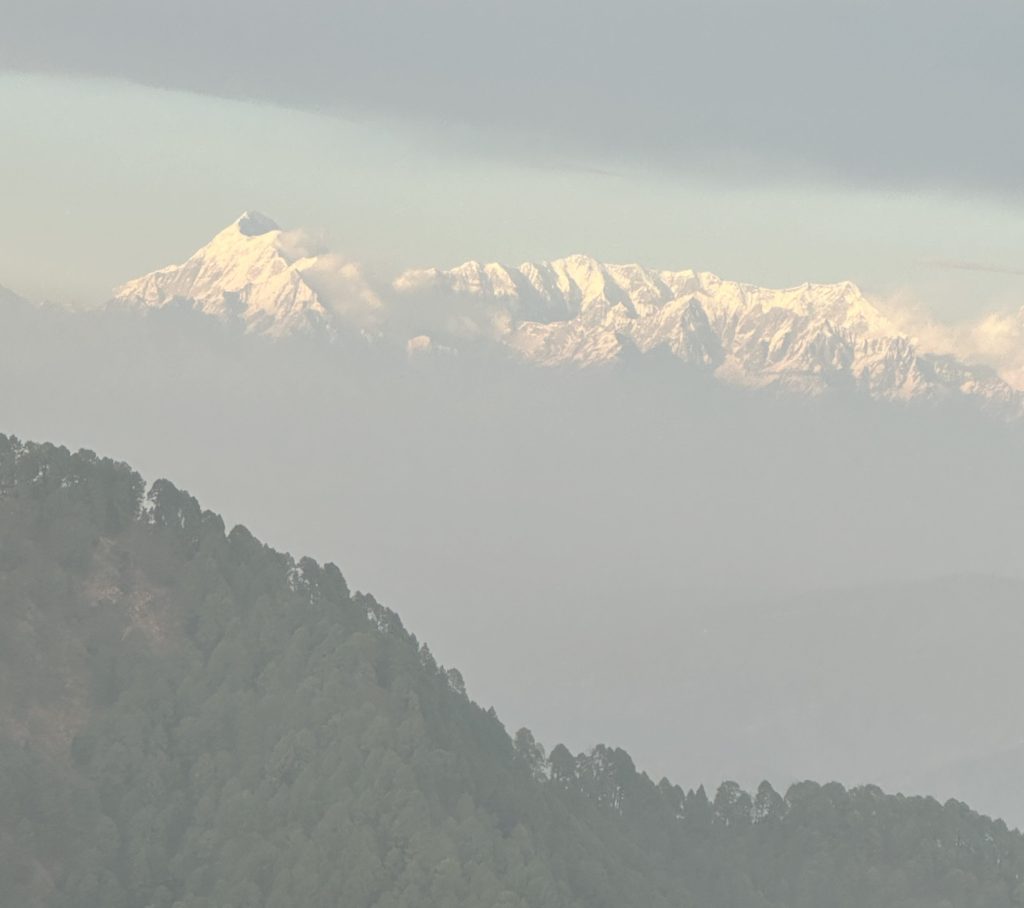
Every time I was in Nainital or driving past Kainchi Dham on my way to Almora or beyond, I would peep out of the car window and trace the trail with the tip of my finger, edging it up to the rim of the rolling, pine-covered slopes. My other pastime was guessing where Nainital would lie, or looking for a familiar shape or sign that could help me place it. I always got it wrong.
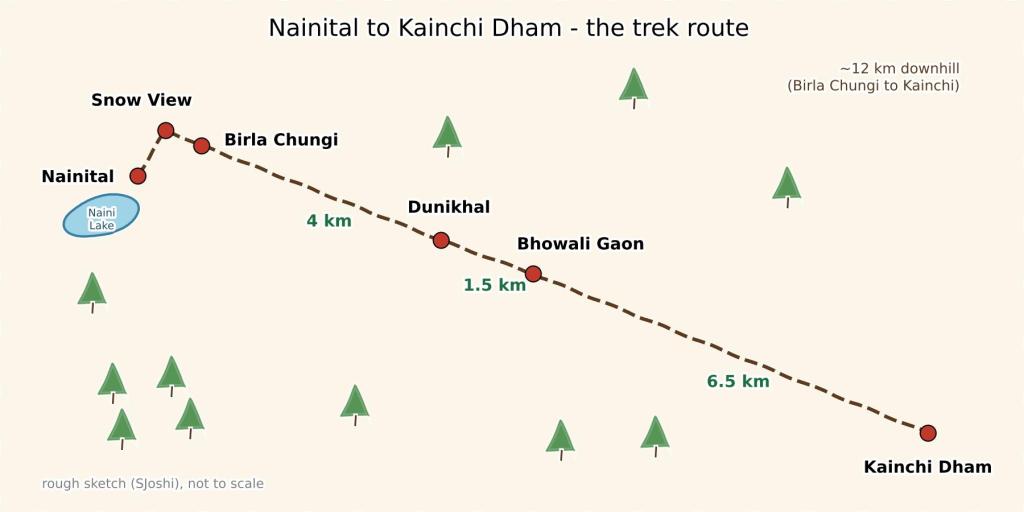
And now I was as excited as a kid. We were finally doing the trail. Woohoo! The Nainital – Kainchi Dham 12 km downhill trail.
Route Map
It was a Saturday morning, with a clear blue sky above, when we set out for Nainital, a little over a two-hours’ drive from my hometown, Rudrapur. I thoroughly enjoyed the hills coming closer, the cool November air, and the slopes presenting themselves in a distinct shade of green.
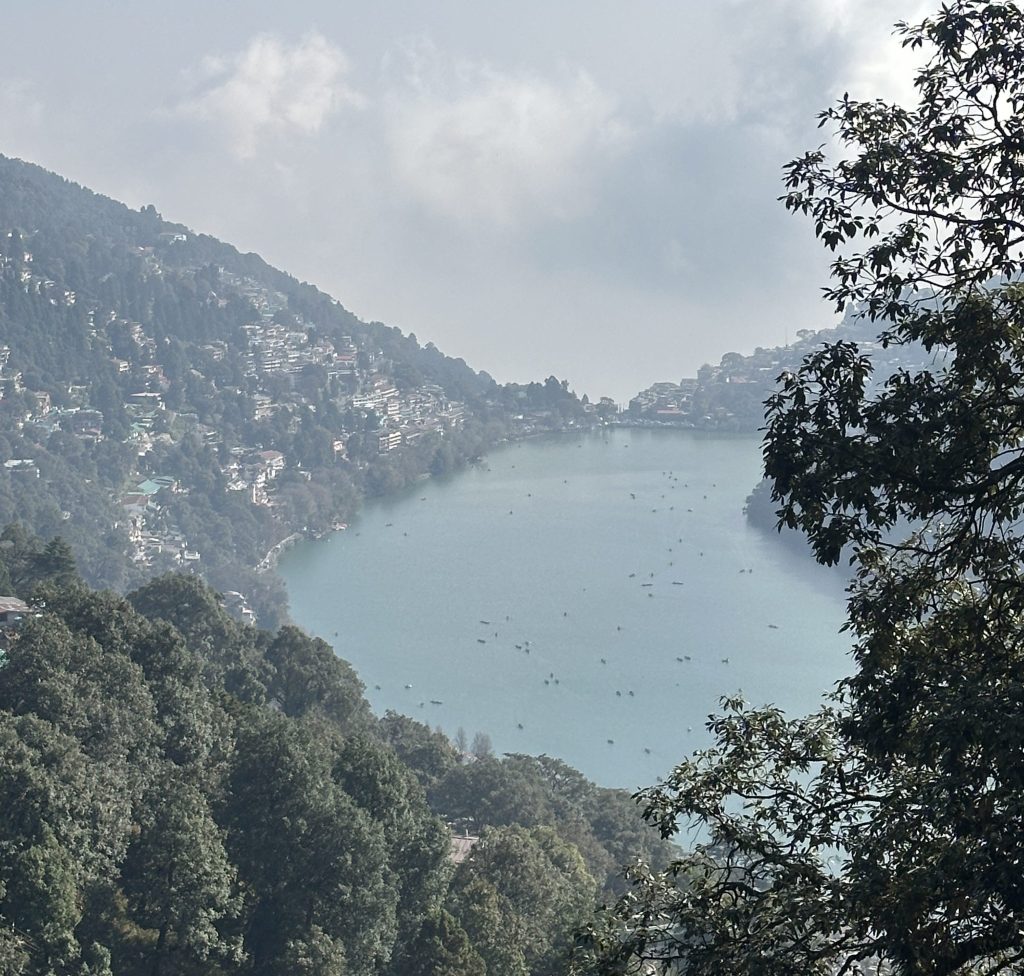
We entered Nainital from the Barapathar side, and I was mesmerized by the crescent-shaped lake. I had grown up watching this lake as a student here, yet I still admired its untouched beauty as if I were seeing it, and falling for it, for the first time.
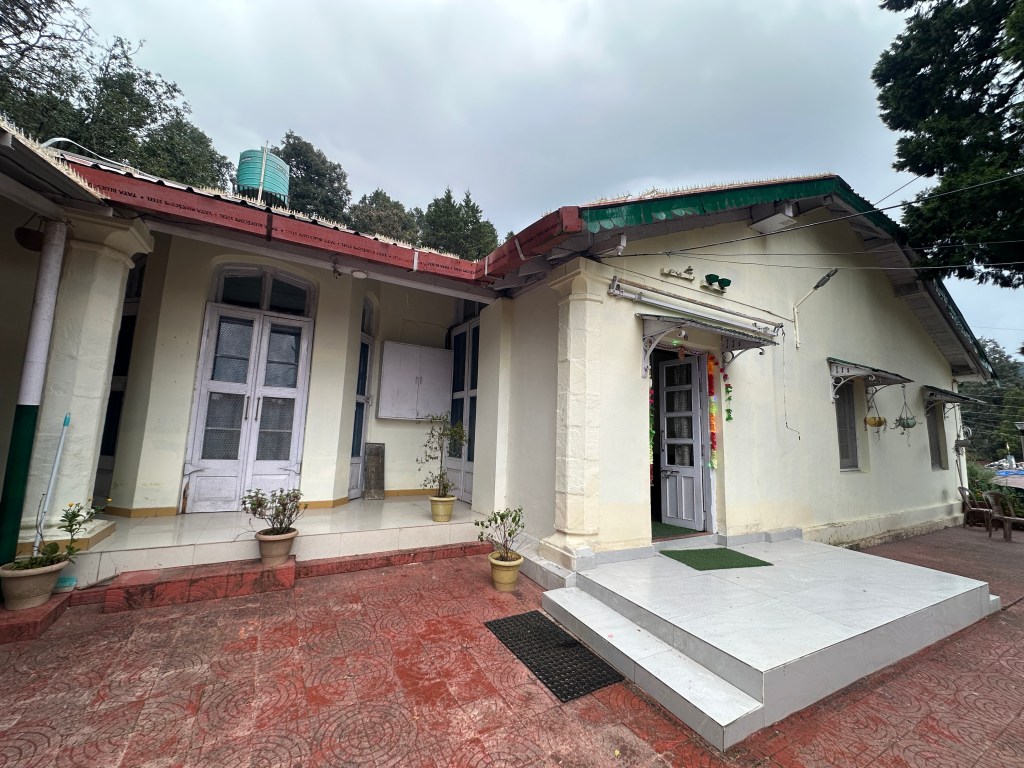
Our lodge for the night was the Old Governor House, probably built in the 1860s and now run by the state-owned Kumaon Mandal Vikas Nigam (KMVN). We walked with our backpacks from one end of Nainital, taking in the everyday bustle: the noise of the vehicles, the ringing of temple bells, and the lake below slowly taking on the colours of the night. By the time we reached this age-old property, the chaos had mostly died down. Deep silence soon followed. The air outside was now heavy and cold. The caretaker showed us our room and went straight into the kitchen to prepare an early dinner. We knew it was dal from the smell drifting through the corridors.
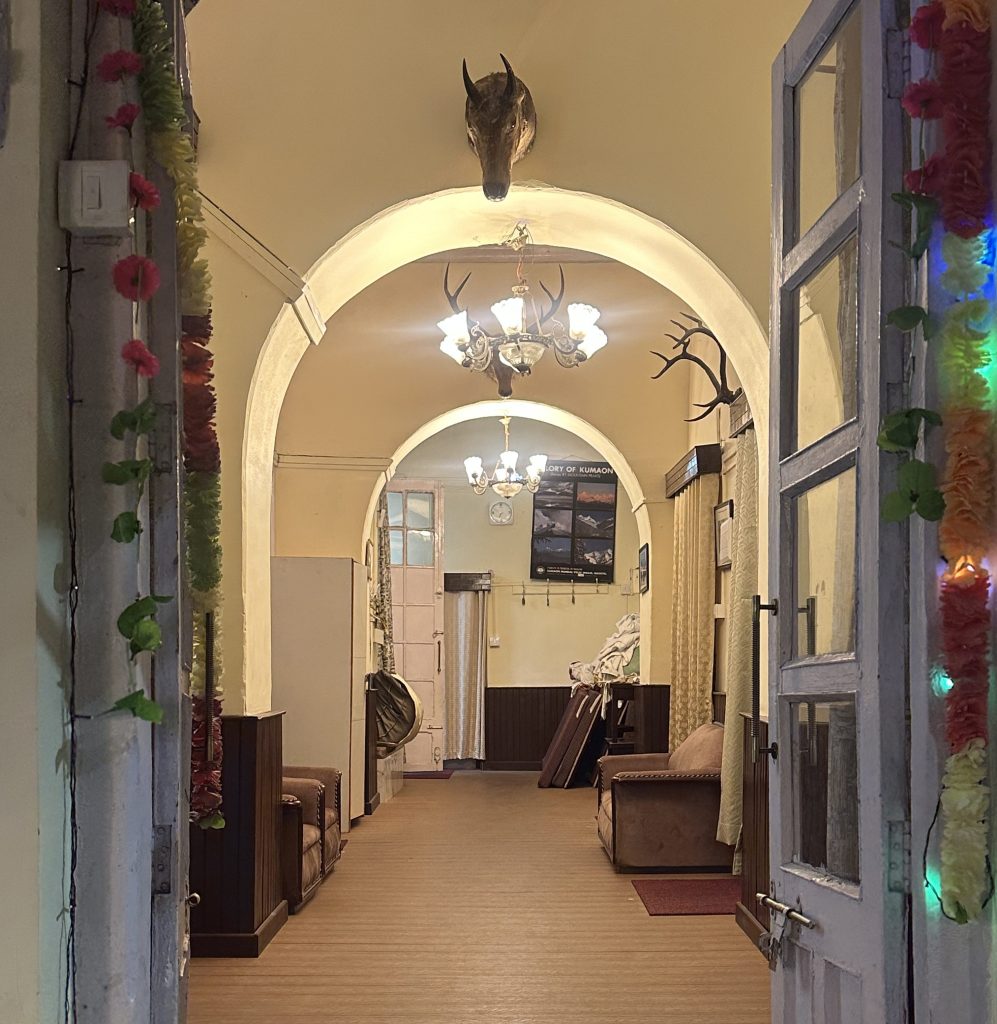
The corridors and the room deserve a special mention. After all, this was the governors’ house from the 1860s for two to three decades, until the new Raj Bhawan was built on Ayarpatta hill. The governors spent their summers here, as Nainital became the summer capital of the North-Western Provinces. It was a small property but nicely kept with high ceilings, nearly everything made of wood. It was typical of the bungalows of that time, and we soaked in the vibe, even the squeak of the floorboards and the mounted deer head staring down at us from the corridor wall.
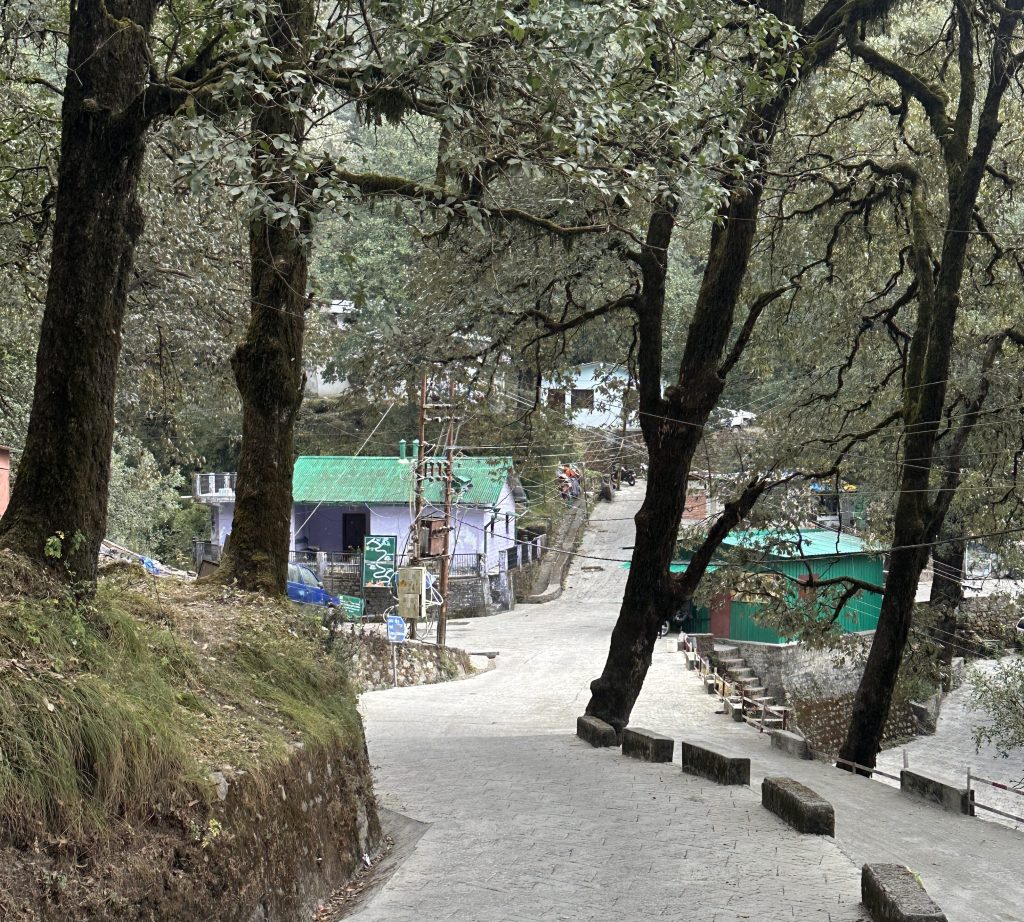
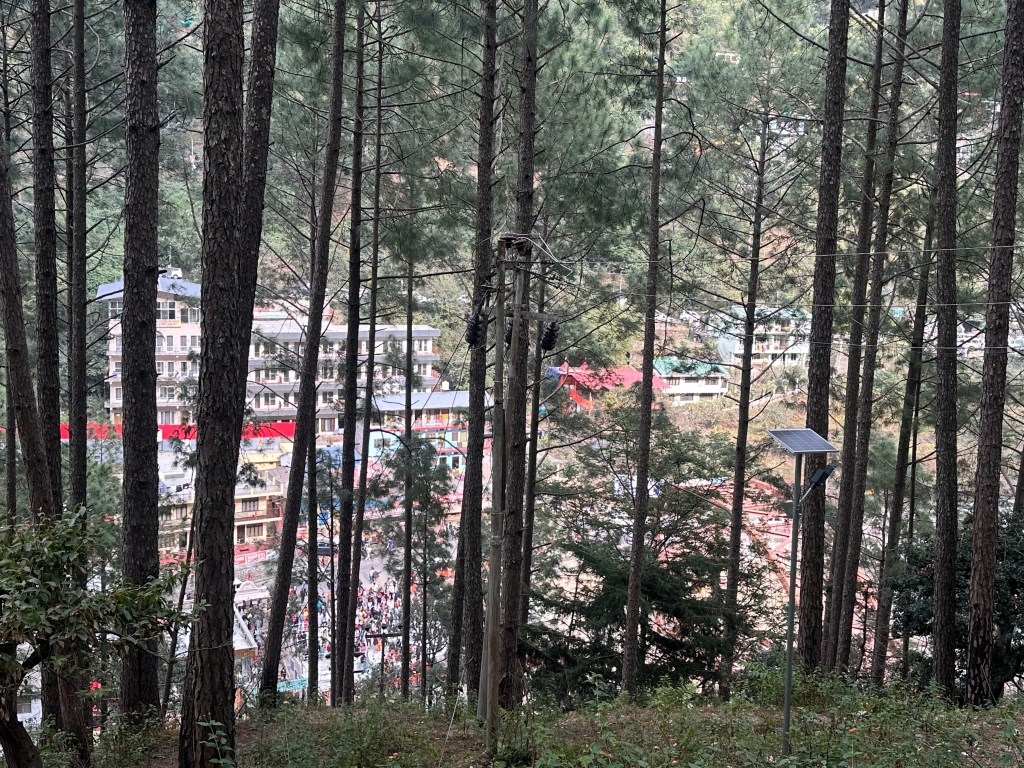
The next day, it started to drizzle. The temperature dropped further, but it was still bearable enough to go ahead with the trek. Barely 100 metres from the bungalow, at the Birla Vidya Mandir Chungi (chowk – google map location ), a narrow gravel path, strewn with fallen leaves, snaked downhill from the northern end. The sky was overcast, but we could still see the distant hills, layered one behind the other. I could hear the shrill sound of the cicadas, maybe a rufous sibia or a thrush, and for sure the magpies. We were now deep in the forest, inching ahead and taking in the little joys nature was willing to offer us.
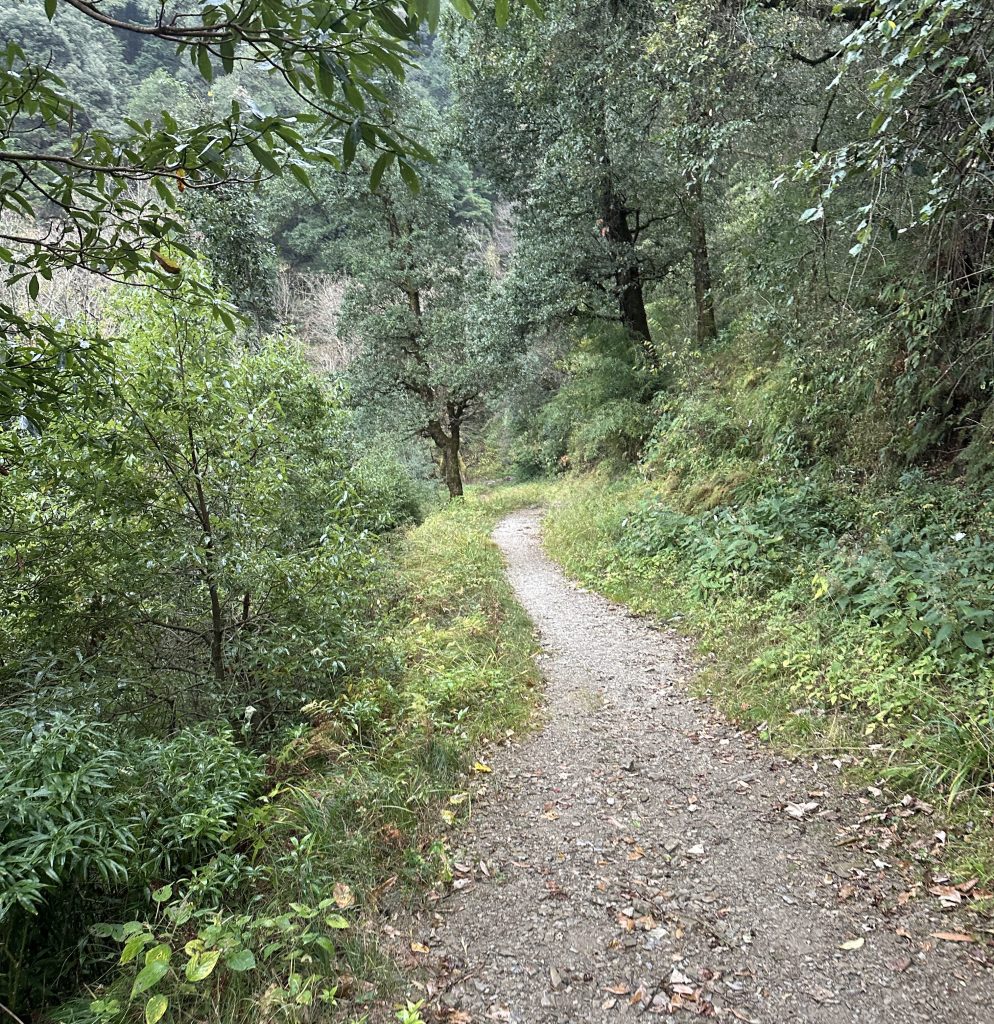
It was still raining, now in sporadic sprinkles. In the deep silence of the hills, the muffled pitter-patter was soothing to the ears, along with the gentle rustle of the raindrops on the leaves, and the crunch of dry leaves under my boots. I came out of this comforting reverie when I spotted, around a bushy bend, a pair of yellow-throated martens.
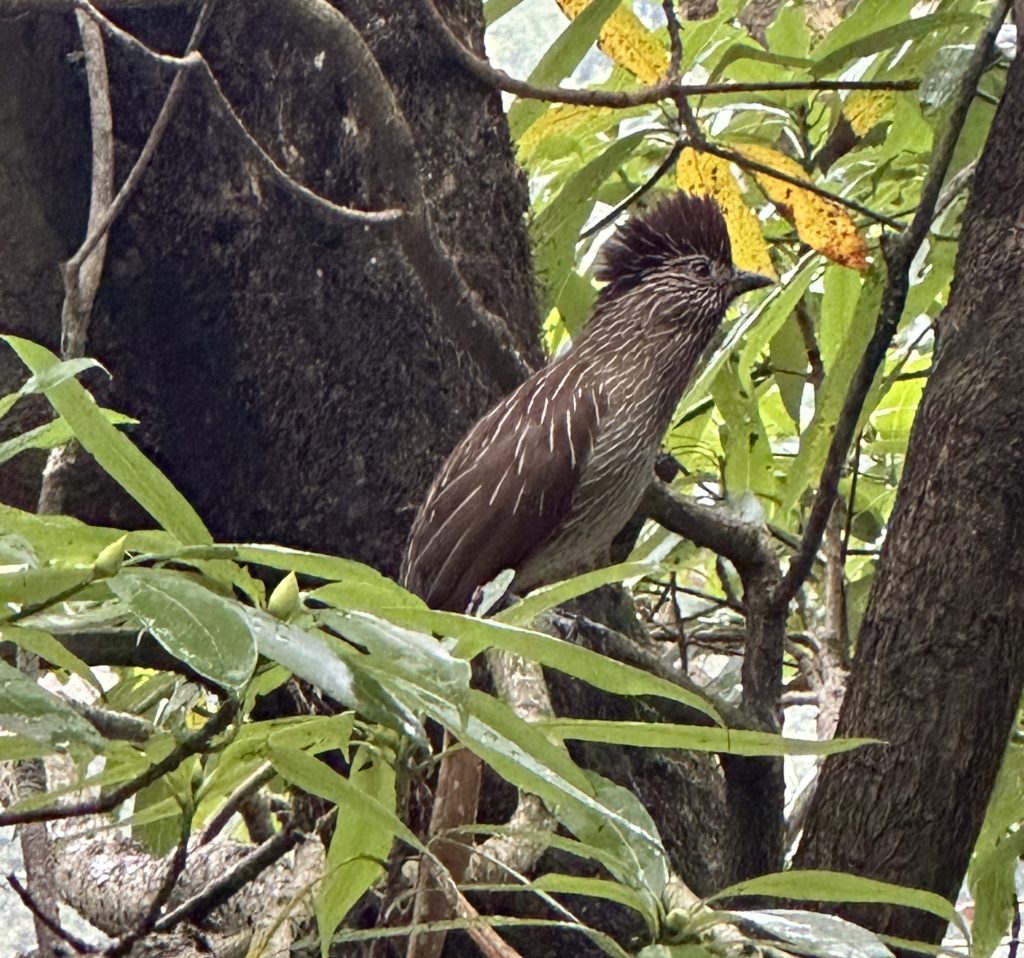
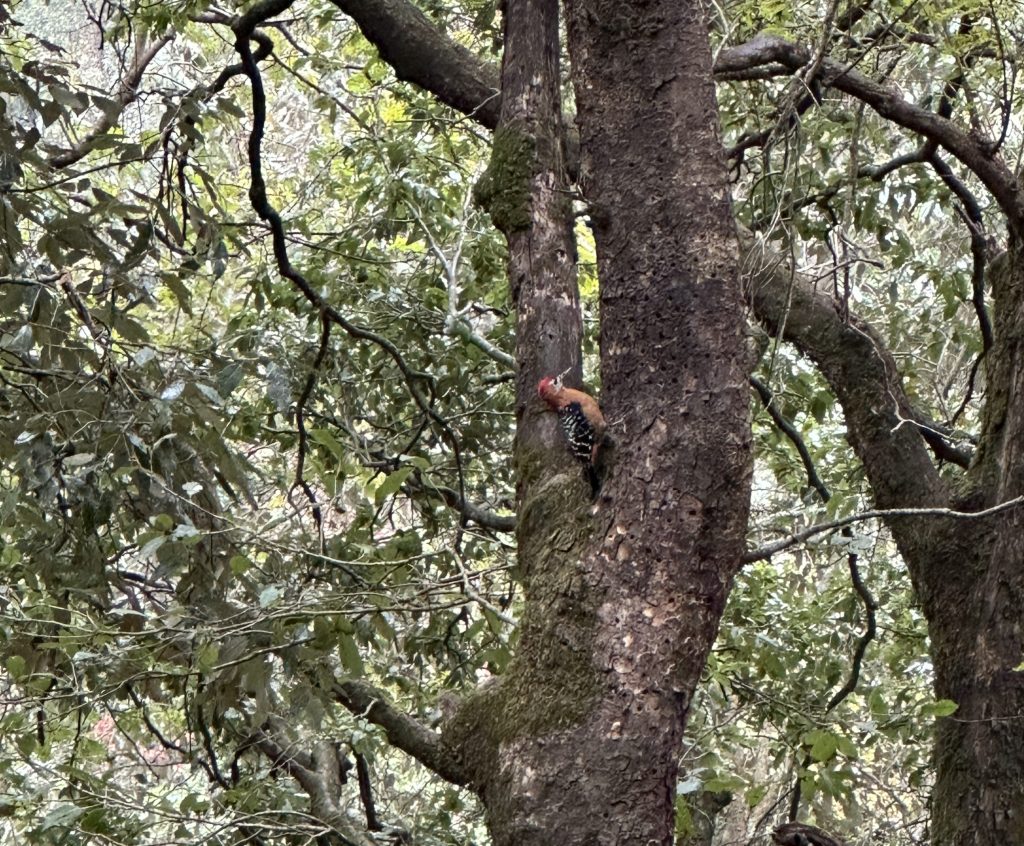
The rufous-bellied woodpecker and the striated laughingthrush showed themselves to us in their most elegant form, and they looked terrific. There were other species too, which the birding guide with us kept pointing on the trail. The woodpecker’s call was unusual, metallic and slightly scratchy, a whole series of notes in fact, stitching the silent hills into a song of its own.
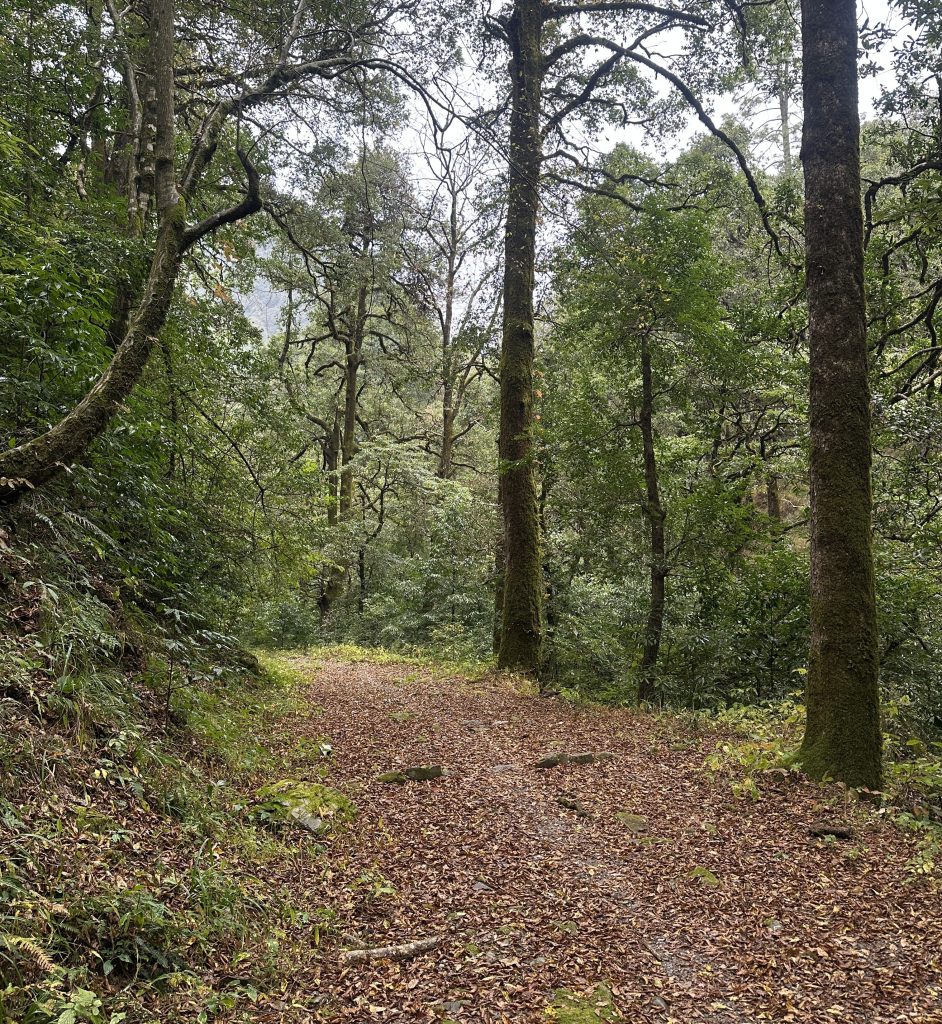
The walk was comfortable, a mix of flat stretches and gentle slopes, mostly downhill. The path was well laid out, but I suspect people hardly use it now. After some good bird sightings and roughly two hours of walking, we hit a metalled road at Dunikhal. It looked new, and it caught us by surprise because we hadn’t expected a road there. We had planned to go on to Ratighat, roughly 5 km further, but walking along a dusty road with cars honking past wasn’t exciting enough to convince us.
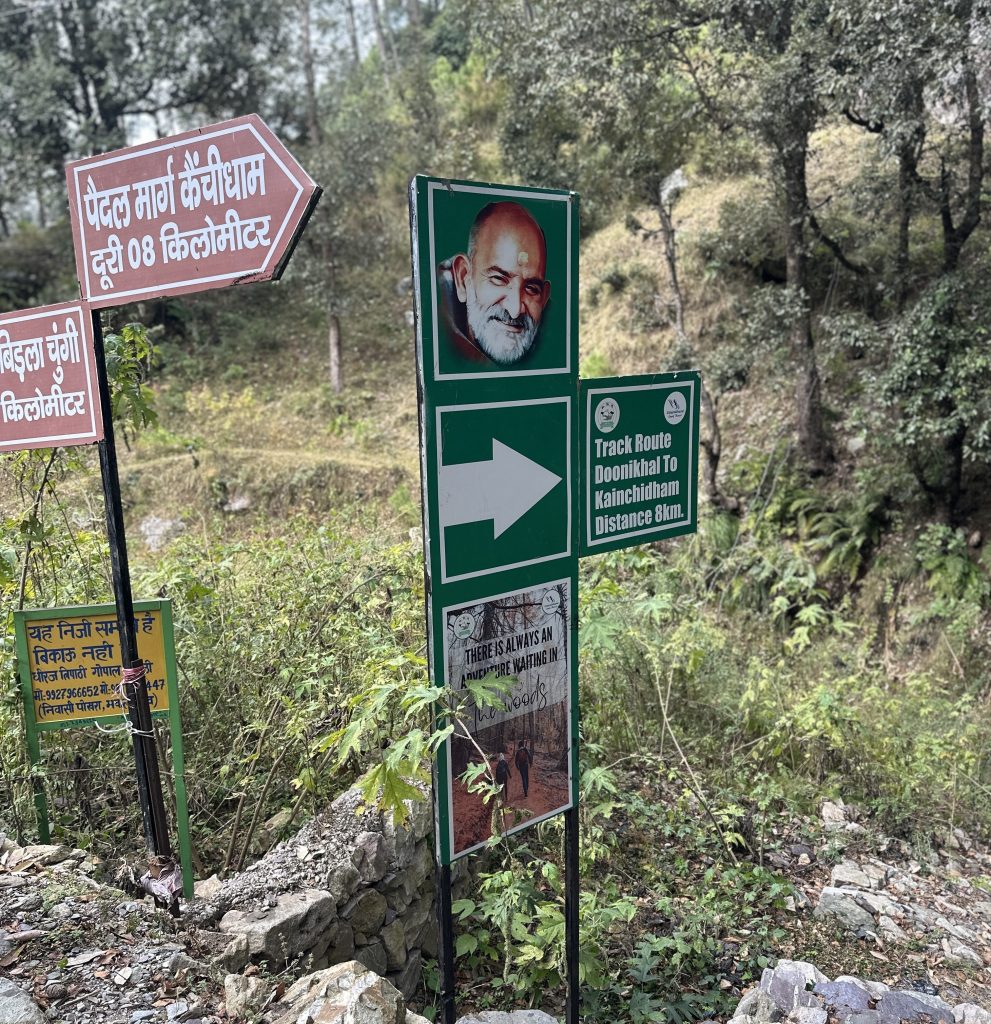
We made some inquiries around, and were told that a little further uphill, a trek path cuts through the forest all the way to Kainchi Dham, roughly 8 km. What more could the group have asked for ? The smiles and energy came back to everyone’s faces. We slung our backpacks tight, left the metalled road, waved goodbye to a mini truck puffing out thick black soot, and were soon among the pines and their needles, in a mild afternoon breeze warmed by the sun overhead.
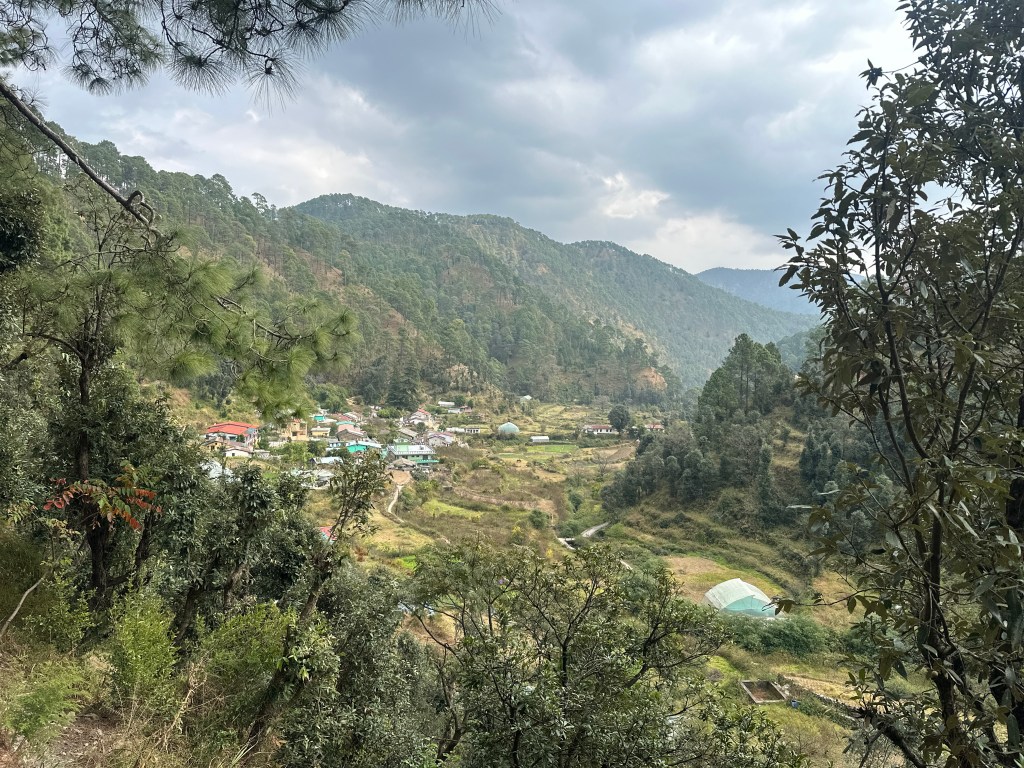
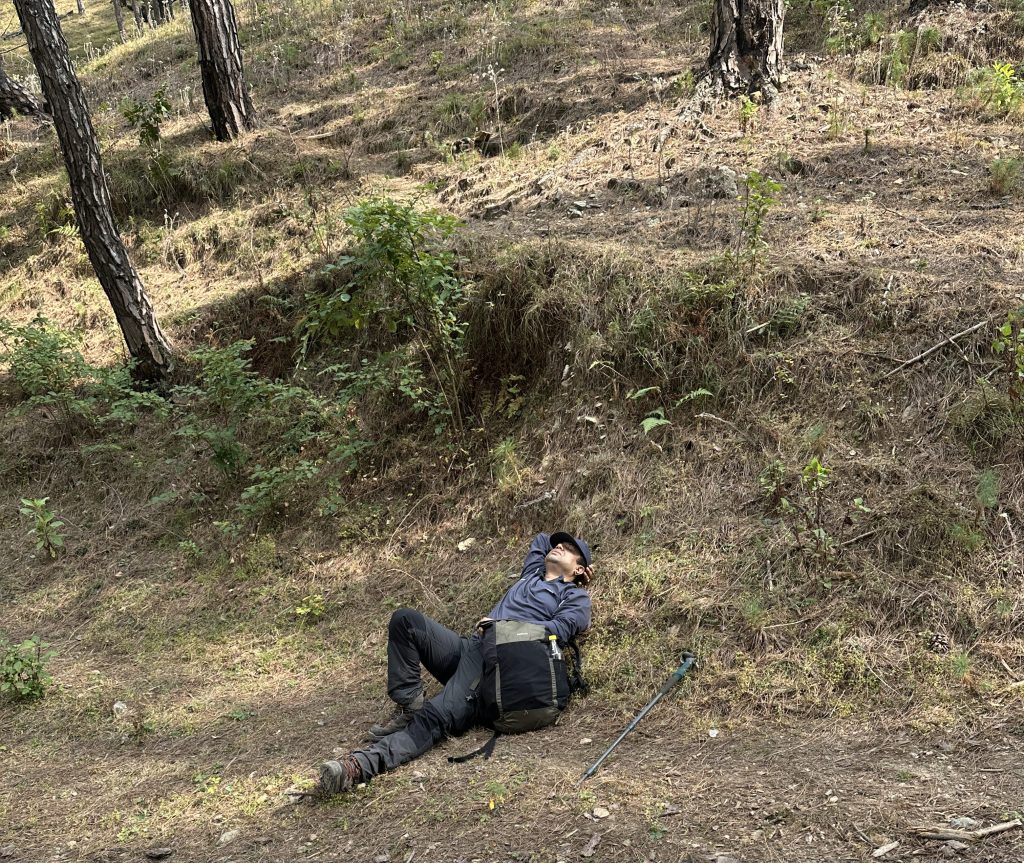
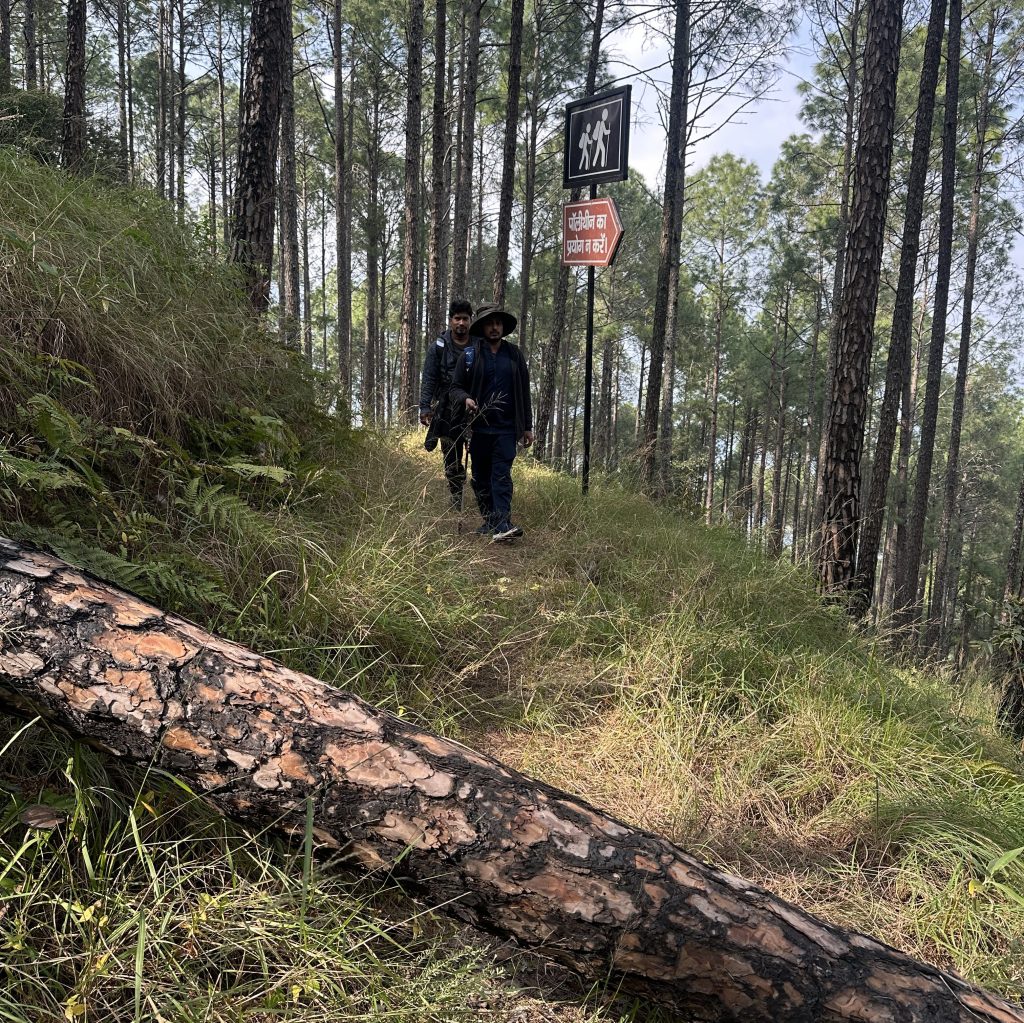
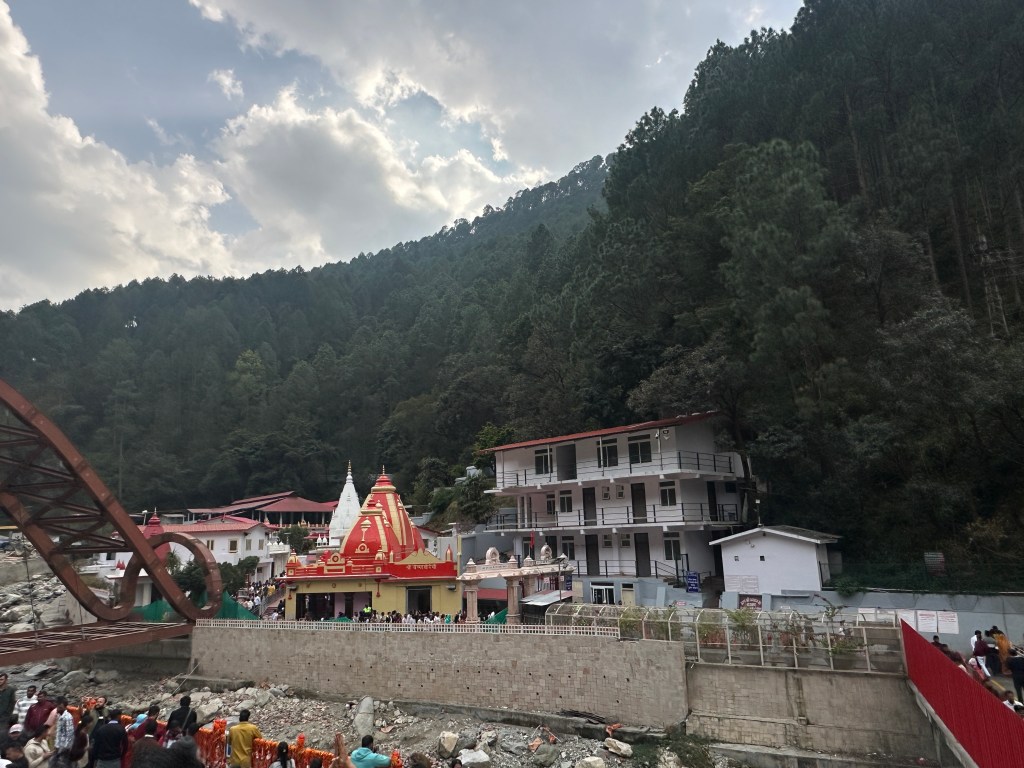
We carried on along the trail. Terraced fields and colourful houses appeared on our right. It was such a happy sight. This was Bhowali Gaon. Around a bend, the trail climbed sharply until we reached the 2 km milestone. From there, it was downhill all the way to Kainchi Dham. We were now on the other side of the mountain, zig-zagging down a path sometimes overgrown with tall grass left over from the monsoon, with the Bhowali–Almora Road now in view below. The trek ended at the back gate of the Kainchi Dham temple.
Thanks for walking along with me.