Holi is well behind us, and so is this post. I had intended to pen this down earlier, but for no particular reason, it is only now that I find myself writing it. The weather has turned rather dramatic this week, the sky is overcast with dark clouds. From my balcony, I can distinctly trace the mountain ranges stretching from the western to the eastern horizon, clear and green, in darker hues. At times, drifting clouds obscure sections of the range, perhaps a downpour is imminent. I am not complaining, the March heat had already settled in, so a few days of cooler weather feel rather welcome.
As I draft this post, I feel myself absorbed in the many frames I captured during my recent visit to Berinag town (district – Pithoragarh), a few days before the arrival of Holi. Holi holds a special place in the hills – its traditions, carried forward over generations, remain deeply rooted and community-driven. While migration has had a profound effect here, this is a time when people return to their villages and towns, setting aside their worries, carrying a packet or two of colours (“Gulal”), visiting homes, playing Holi, and wishing each other a prosperous year ahead.
Weeklong celebration | Kumaoni Holi | How it unfolds
Holi season in Kumaon begins on Ekadashi (Phalguna Shukla Paksh), typically about a week before the main Holi day (or “Dhulandi”). On this day, villagers visit their Kuldevi (clan deity) temple and tie a red cloth (or “Cheer”) to a designated tree. This ritual, known as Cheer Bandhan (tying of Cheer), marks the onset of the season’s Holi celebrations.
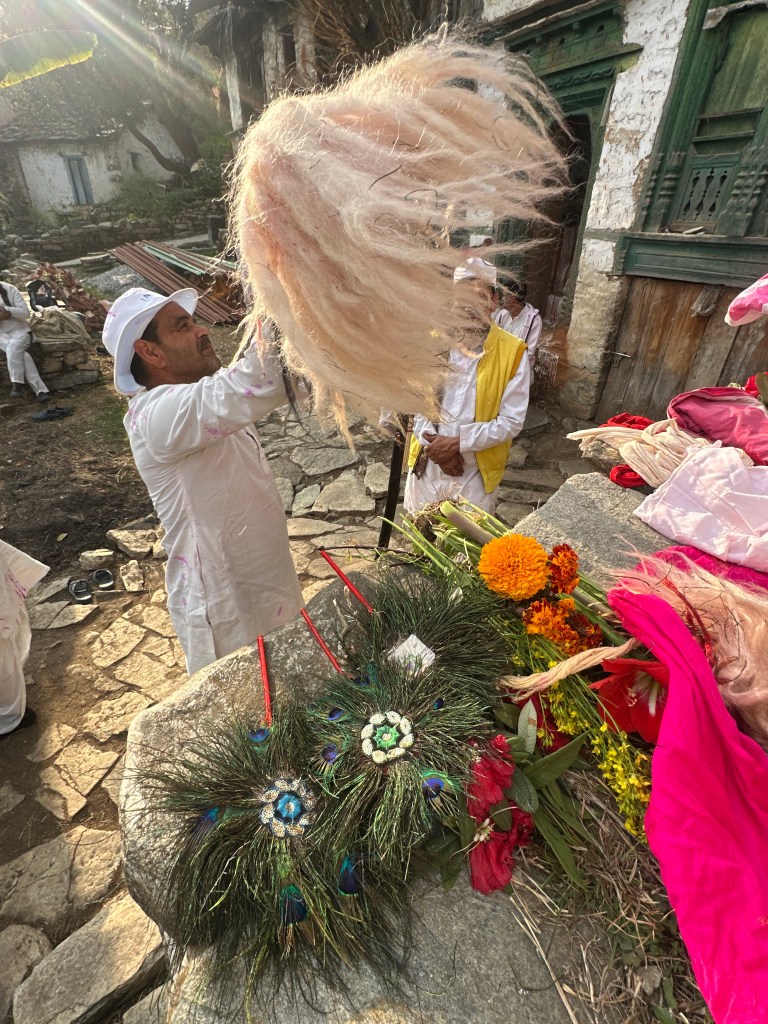
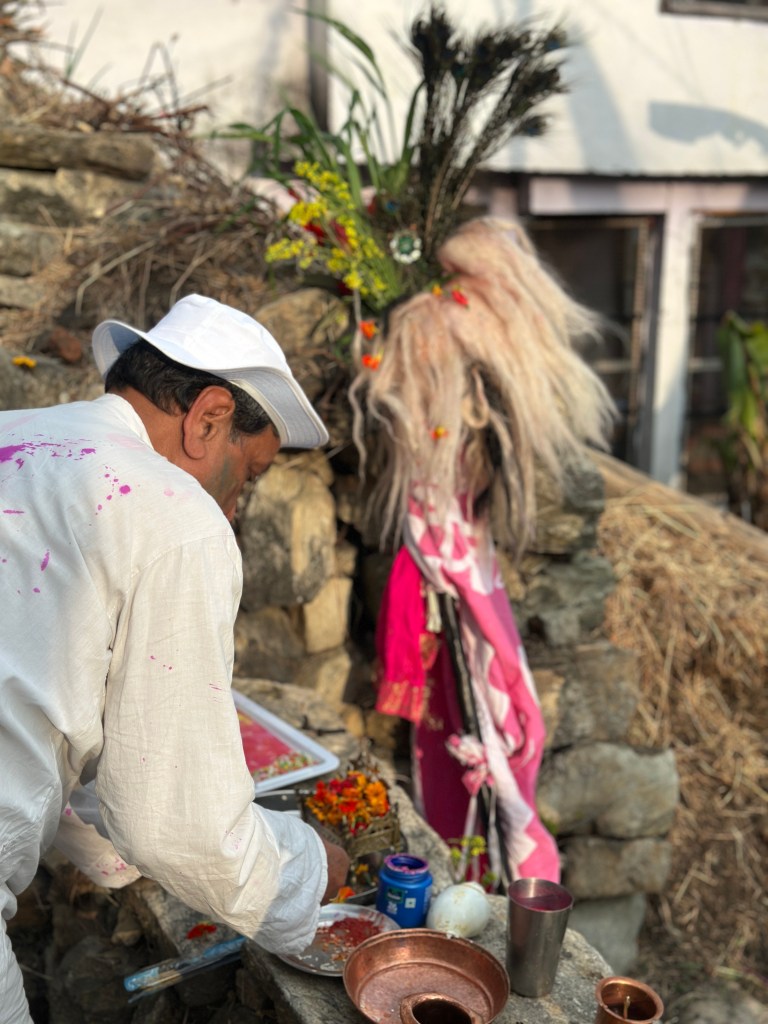
The next stage (day 2) involves the preparation of the Nishan, a ceremonial wooden staff adorned with seasonal flowers, ornaments and sacred cloth, symbolizing Goddess Bhagwati (Shakti) and Lord Hanuman. An elaborate ritual is conducted by the village priest, with villagers gathering at a central place as the Nishan is prepared. In some villages, two separate Nishans are made, one dedicated to the Goddess and the other to Hanuman.
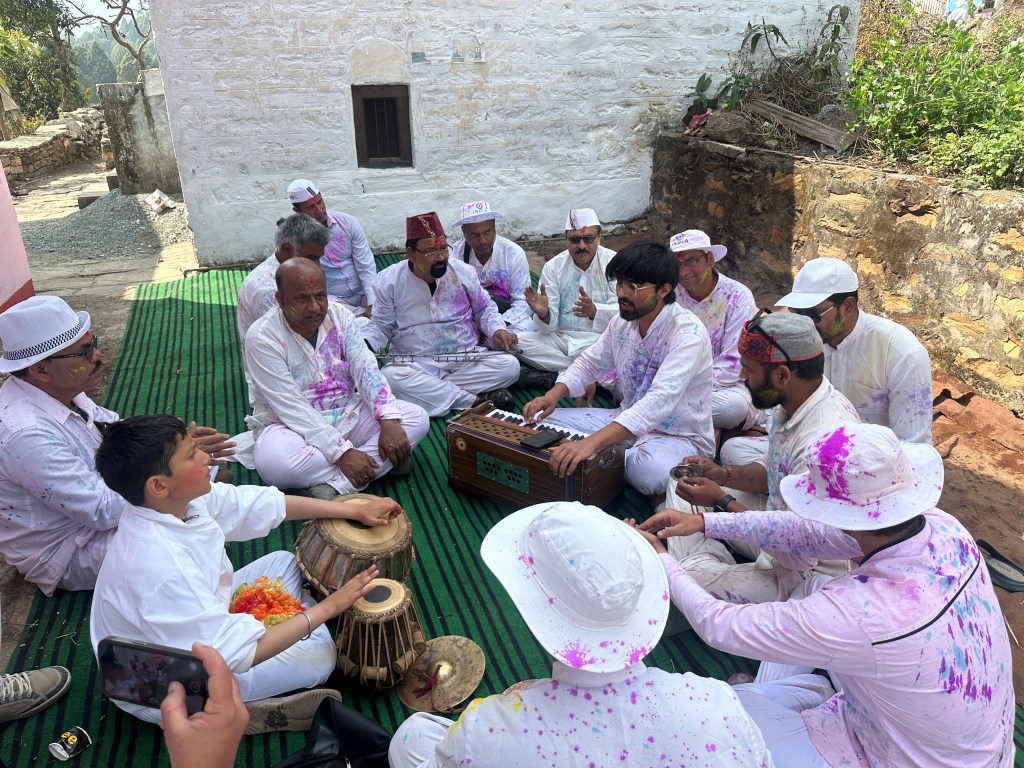
Following this, usually on the 3rd or 4th day from Ekadashi, the villagers carry the Nishan to a designated Shiva temple. Over generations, each village has identified such a temple in its vicinity. Here, people gather to sing Holi songs – both Baithaki (seated) and Khadi (standing) before returning to their village.
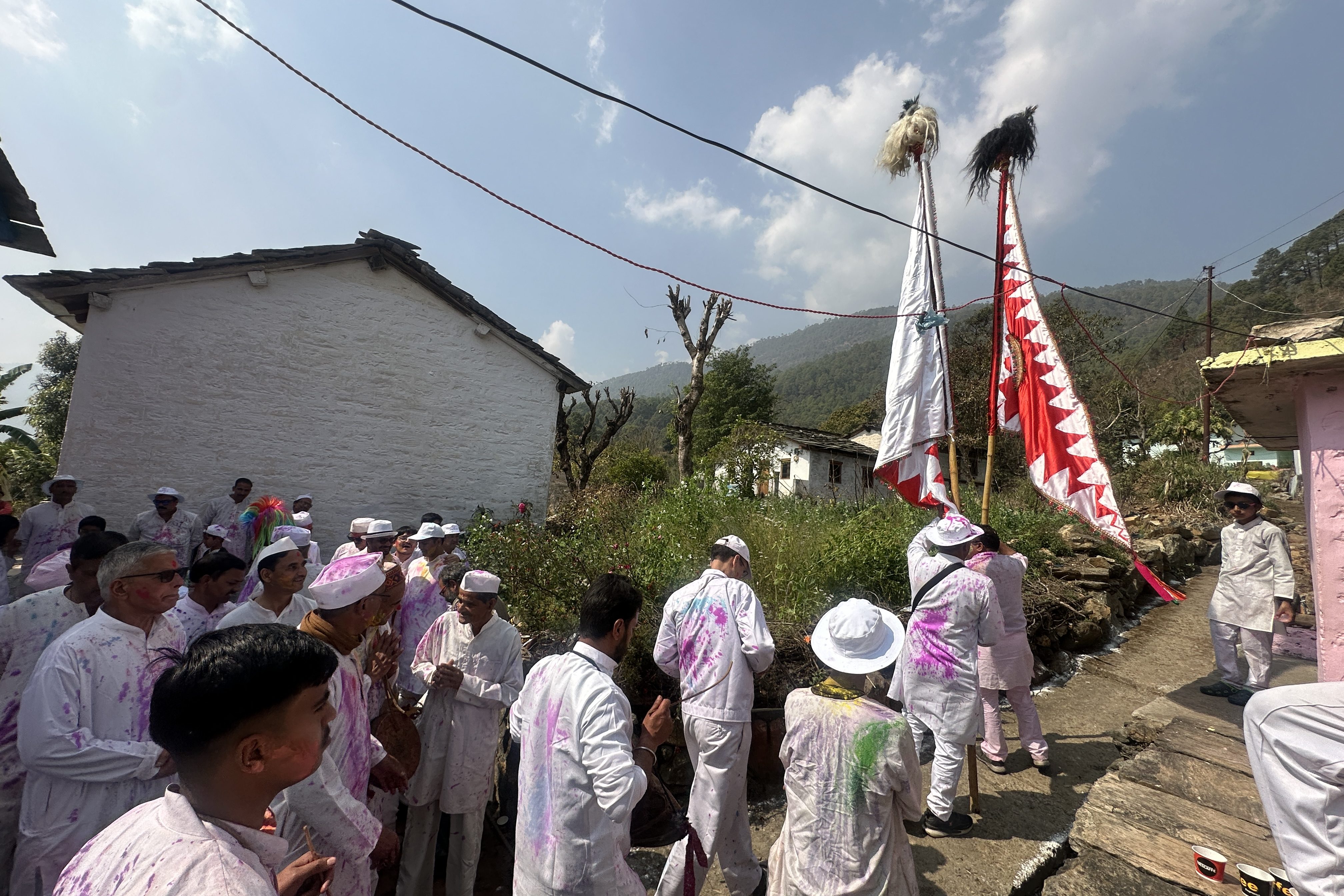
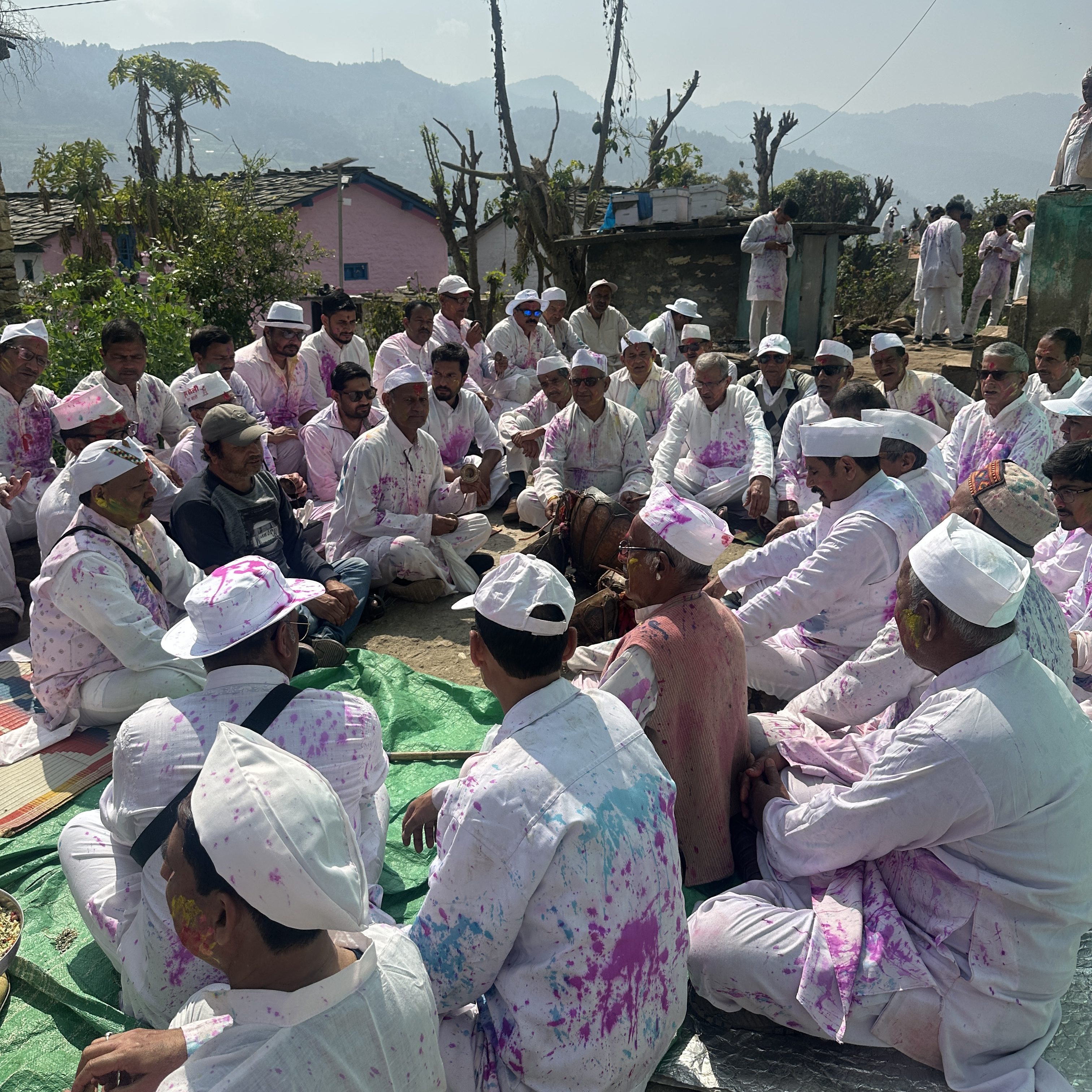
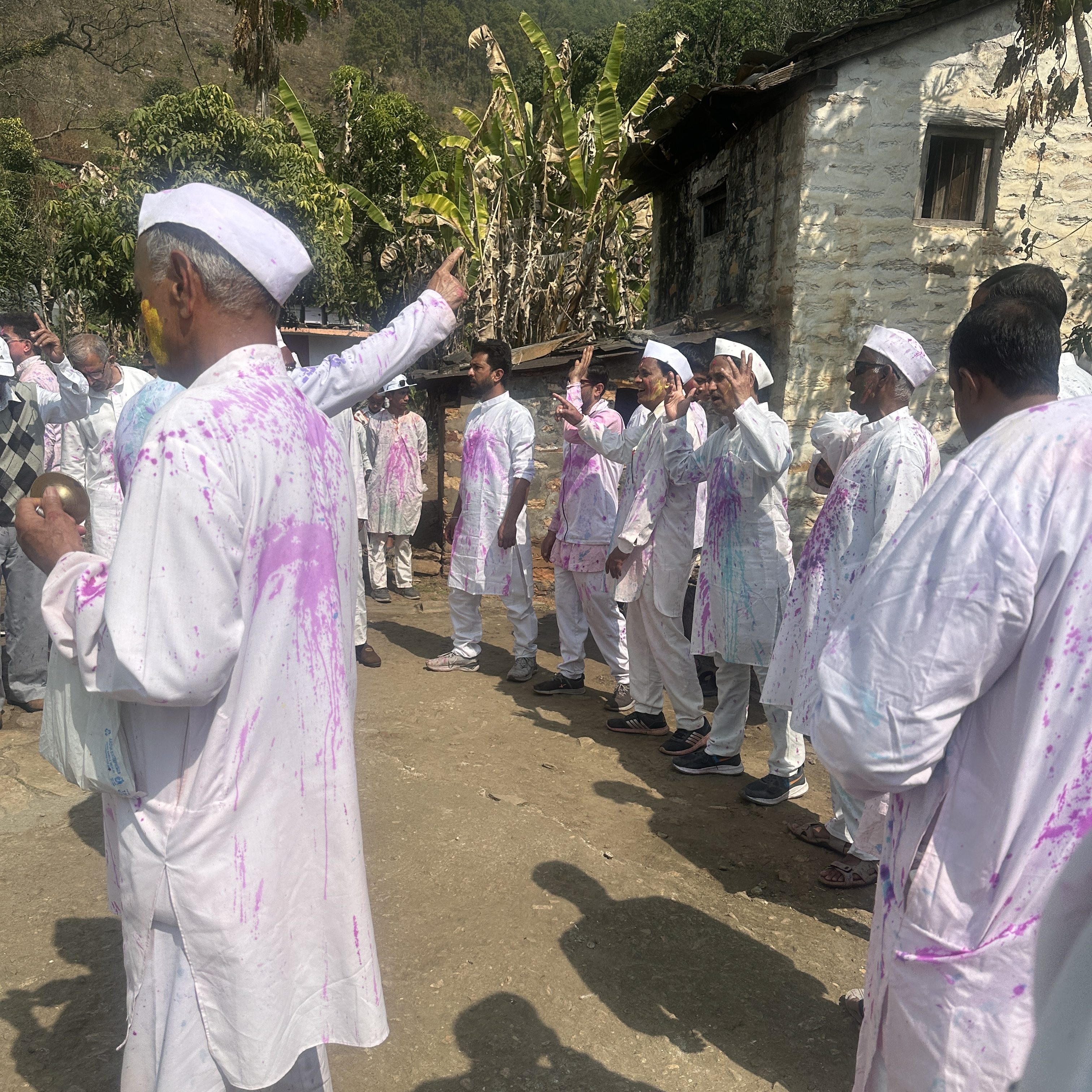
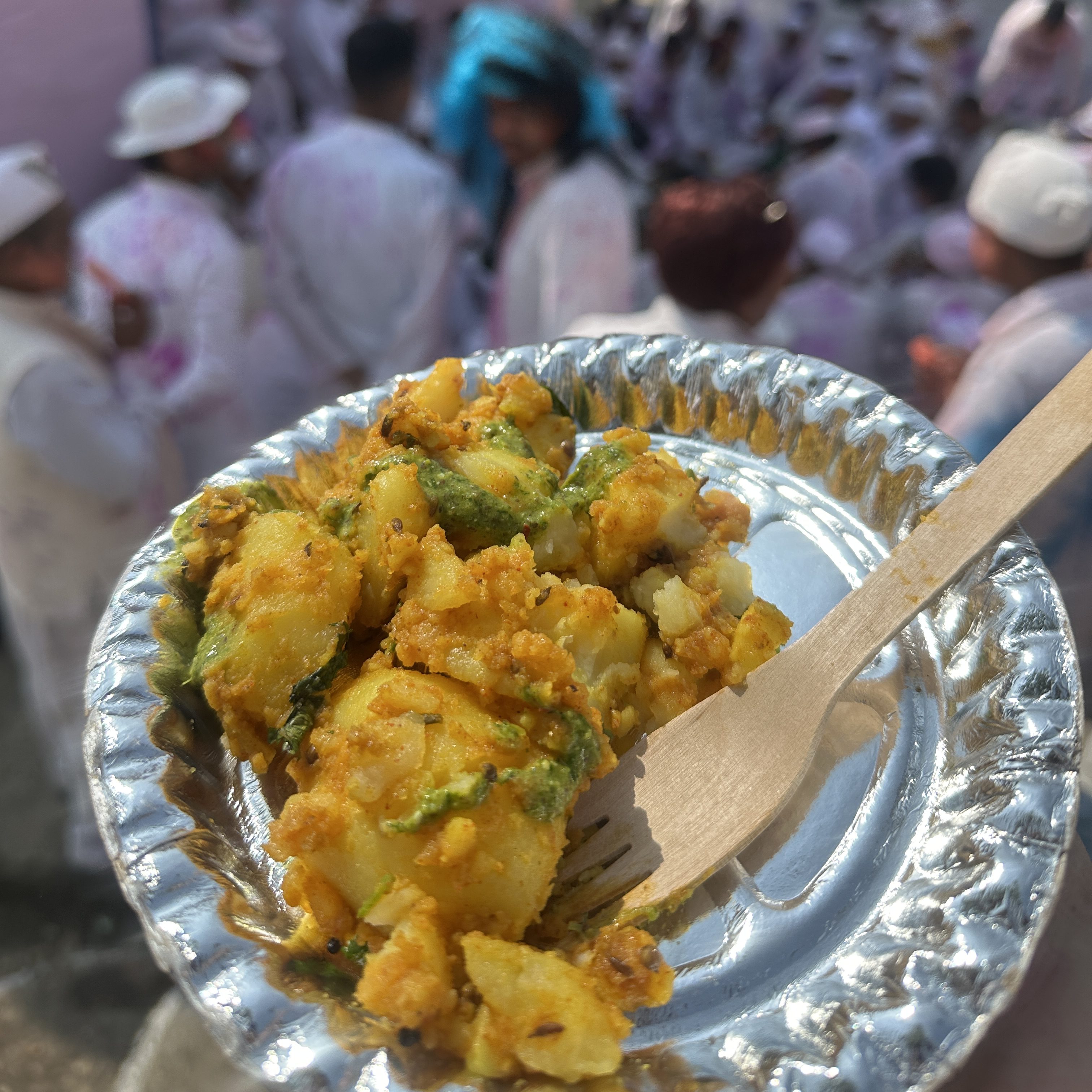
From the next day onwards, the more elaborate process of Holi celebrations begins. Each household in the village is visited by the community. The Nishan is placed at a designated spot, and the household members offer their respect and seek blessings for a prosperous year ahead. Meanwhile, in the household’s courtyard, others gather in a circle, singing traditional Holi songs accompanied by musical instruments including Manjira, Harmonium and Dhol. They are served simple refreshments – Aloo ke Gutke, sweets, tea, saunf and more.
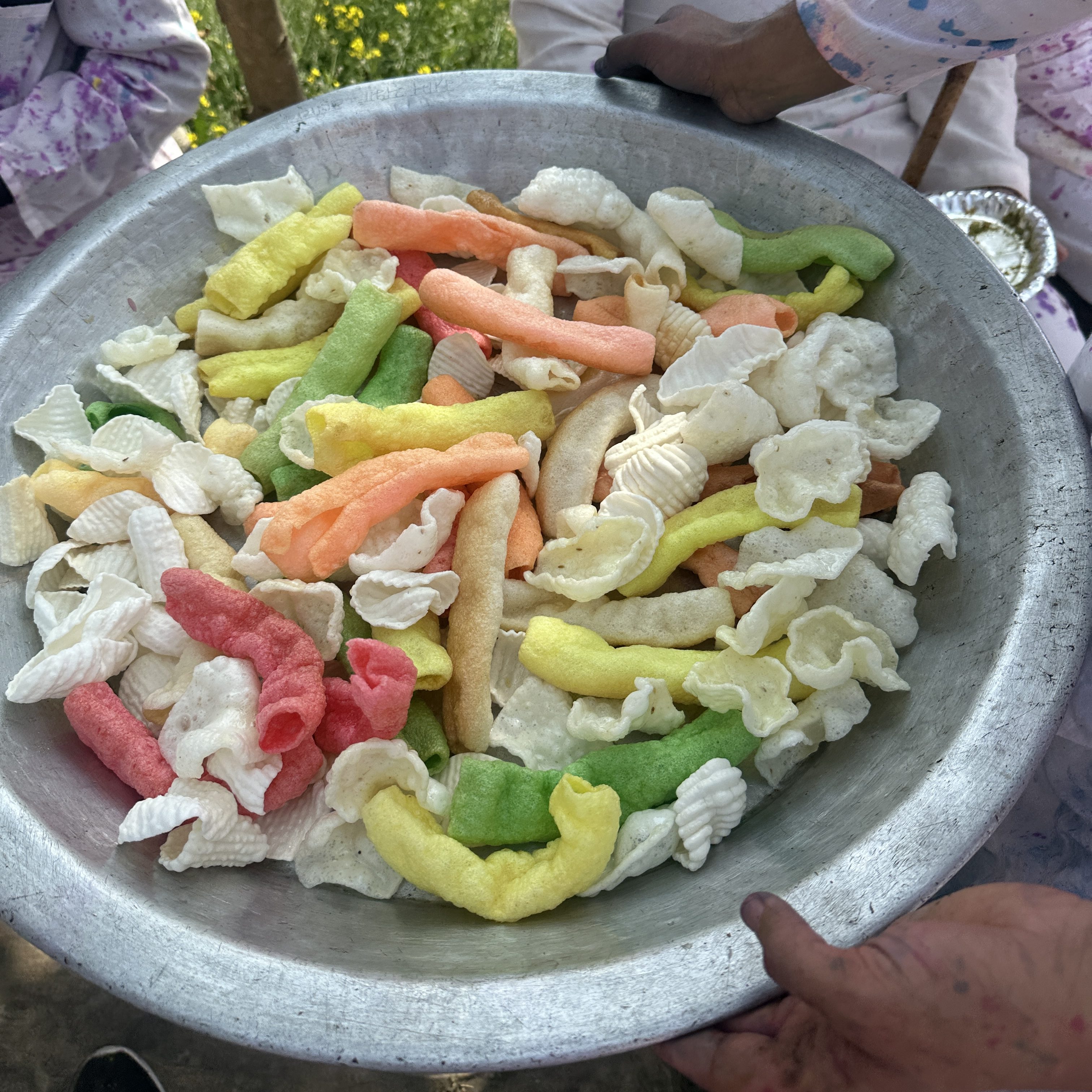
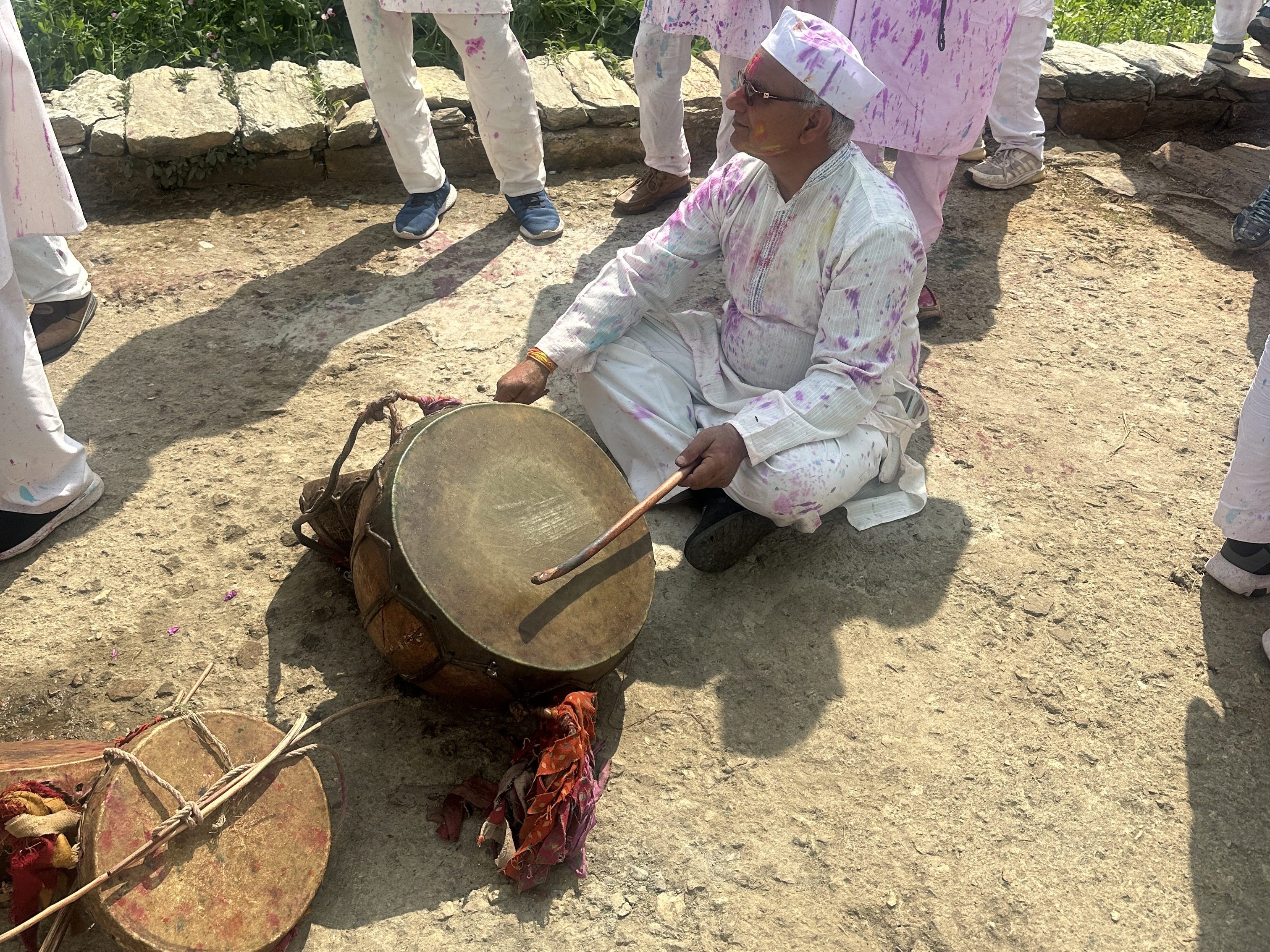
These visits continue until the main Holi day (Dhulandi). As the sun begins to set on the western horizon, people gather at a central place, apply tika on each other’s foreheads, exchange sweets and greetings – and gently bring the week-long celebrations to a close. People also carry back a piece of the cheer, considered auspicious, and place it in their home temples.
The elaborate traditions of Kumaoni Holi have been carried forward across generations. The Chand rulers, who governed the region from the 12th to 18th century, are believed to have celebrated it with great grandeur – taking it from royal courts to temples, and eventually into village life.
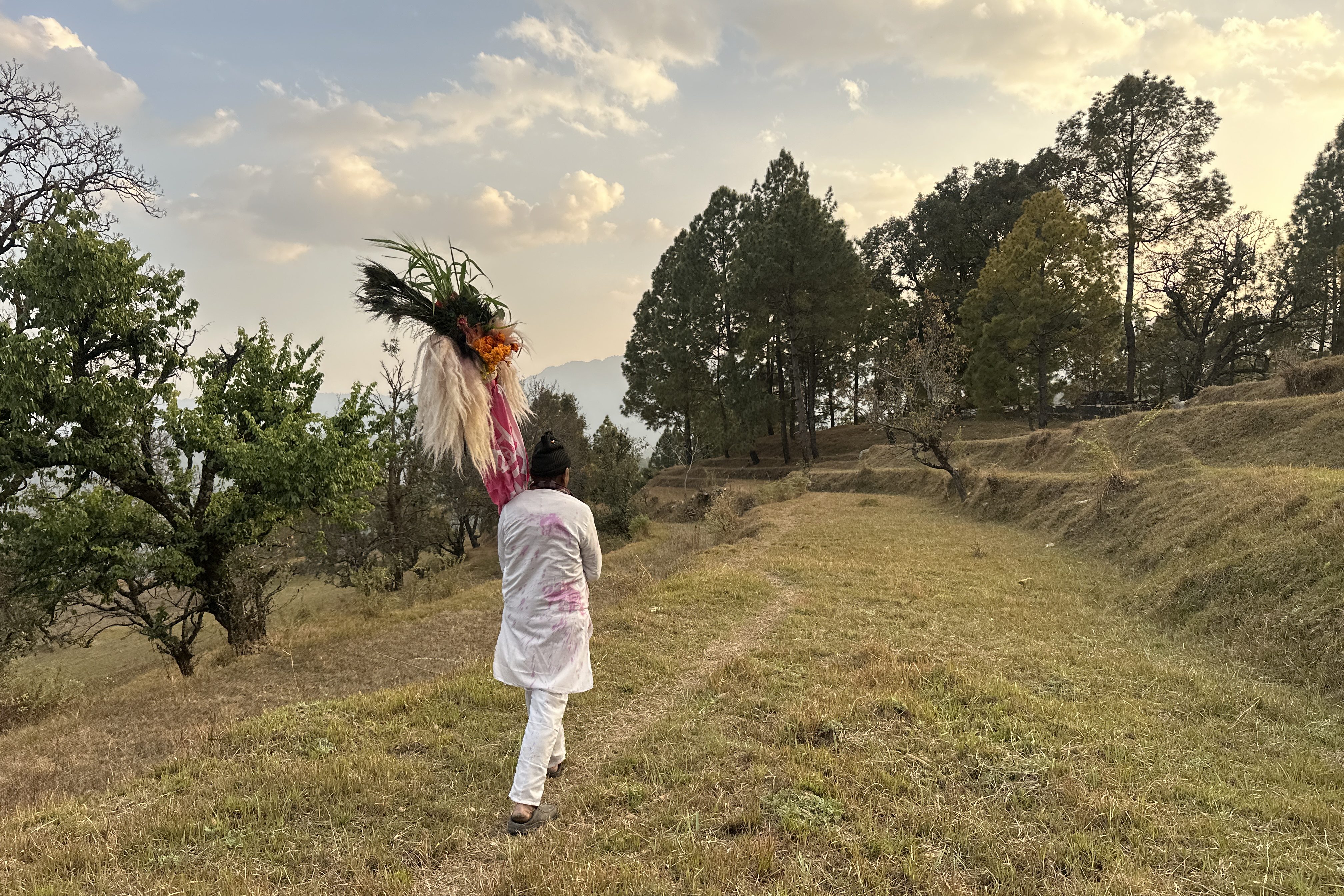
This intangible cultural heritage of the Kumaon region reminds us that festivals are more than rituals, they are threads that bind the communities together, nurturing a shared sense of purpose, belonging and prosperity.
Enjoyed reading about the rich cultural heritage of Kumaon? You may also like another post from the Garhwal region that I wrote a few years ago – on the sacred procession of Goddess Ganga from her winter abode at Mukhba to her summer abode at Gangotri. (Click here)
If you enjoy such content, I invite you to subscribe to the blog.


Enjoyed reading this Saurabh.
Also expecting an elaborate post on the legend and recent history of perhaps the most intriguing festival that Our part of Himalayas have, Phool dei. May be someday soon. 🌞
LikeLiked by 1 person
noted Narayan. I’ll keep this in mind and put together a post on Phool Dei !! 🙂
LikeLiked by 1 person
Enjoyed reading about Holi celebration. once, many years ago we too celebrated Holi time in Jageshwar. Holi in Pahad is steeped in traditions. lovely write up.
LikeLiked by 1 person