
Barsu is a charming village situated in a secluded part of Uttarkashi district, approximately 12 kilometers away from the block headquarters of Bhatwari town. Nestled on gently sloping terrain, the village is flanked by towering rocky cliffs on two sides and offers a mesmerizing and unspoiled view of the mighty Himalayas to the east.
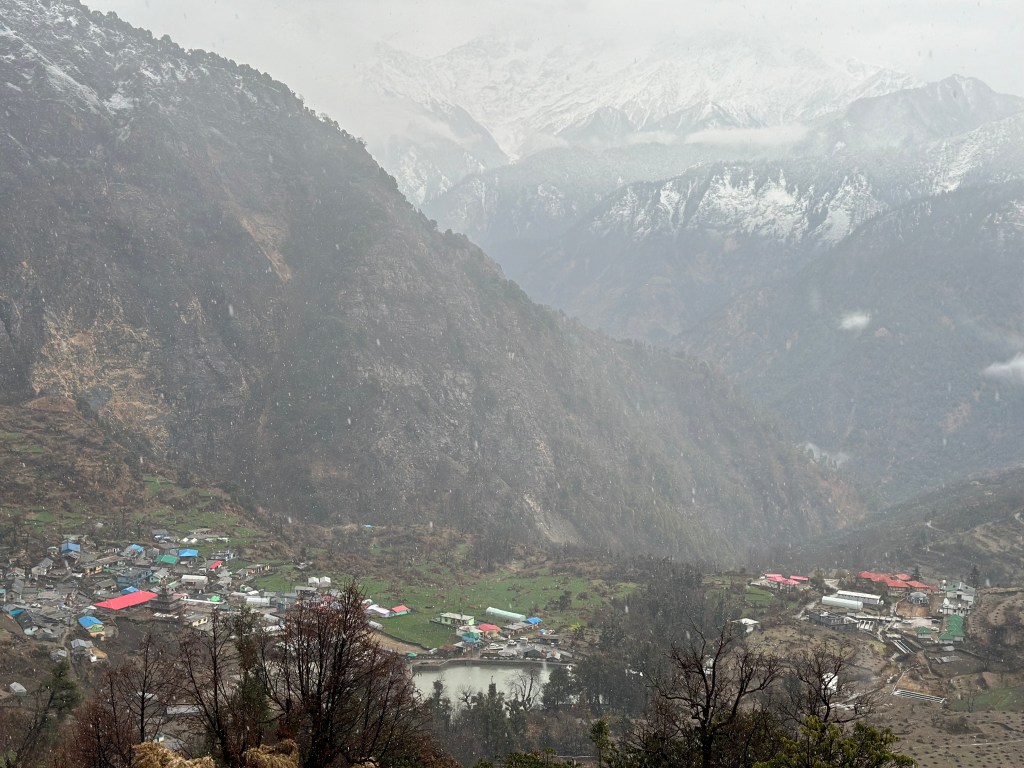
Raithal and Barsu serve as the starting points for the trek to the renowned Dayara meadows. Having undertaken the Dayara trek from Raithal a few years ago, I was eager to explore the alternative route via Barsu village, especially in a different season when the presence of snow would transform the landscape. After closely monitoring the weather, I identified a window when snowfall was predicted (1st week of March this year). My choice for this season’s adventure was the Barnala Lake trek, situated approximately 4 kilometers from Barsu village and along the route to Dayara Bugyal (meadows).
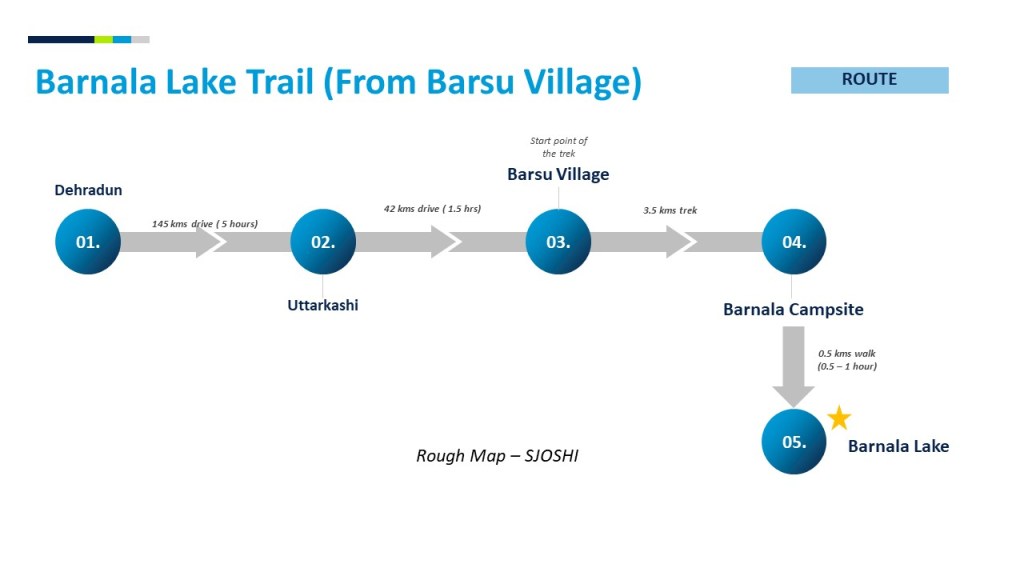
Before I delve into the details of the experience, here’s the quick overview of this adventure.
- Barsu village is accessible via a 180 km drive from Dehradun, taking approximately 6-8 hours of driving time. The map below illustrates the route. If you wish to take public transport, you need to arrive at Uttarkashi and then take the only bus that leaves for Barsu at 3 PM. The bus from Barsu to Uttarkashi leaves in the morning at 9 AM. Other option is to take a shared taxi.
- Roughly 2 km ahead of Bhatwari town on the Gangotri Highway, one needs to take a detour for Barsu village. The road signs are prominent and will guide you to the pathway. From here, Barsu is about 10 km away, and while the road is narrow, it is motorable, and the traffic is limited.
- Barsu is home to around 100 families and is a thriving village by hill standards.
- Perched at an altitude of approximately 2,350 meters, Barsu is located roughly 12 km from Bhatwari, 55 km from Harsil, and 75 km from Gangotri Dham.
- Barnala Lake (altitude 8,000 ft) is a 4 km trek from Barsu, and continuing 2.5 km beyond Barnala Lake, one can reach Dayara Bugyal,a well known high-altitude meadow (If you wish to read my dedicated post on Dayara Bugyal, click here)
We arrived at Barsu late in the evening. It was raining when we got there. The deep silence had enveloped the village, and the inhabitants had mostly retreated into their slumber. We checked-in at the Govt. run GMVN Barsu. The accommodation was modest, and after a simple meal, we retired to bed. The rain persisted, hammering on the tin roof throughout the night, but it lacked the courage to deter us from slipping into our sleep.
Trees in the area – the forests are flanked by majorly 2 types of trees. Oak and Rhododendrons. I witnessed all the 3 Oak varieties ( Banj , Moru and Kharsu). Rhododendrons were yet to bloom.
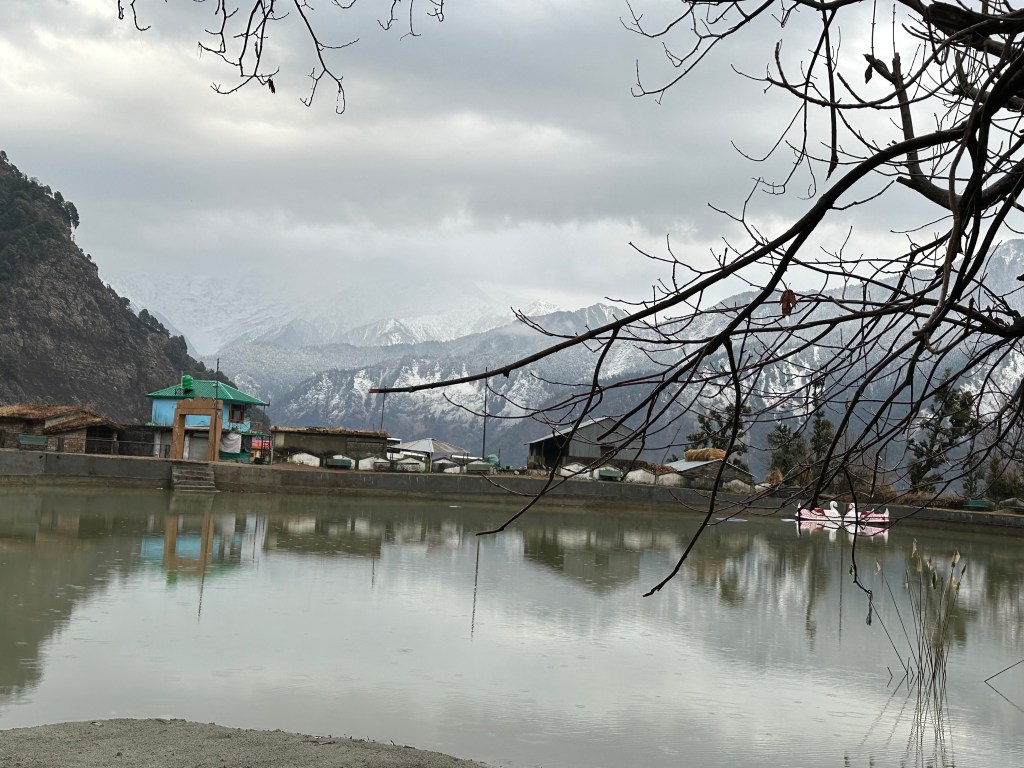
We embarked on our journey by foot around 7 AM from the GMVN property. The sky was overcast, and in the distance, the mountain peaks were adorned with heavy snow. Our excitement was palpable. The initial steep 1 km stretch lacked any snow, but as we ascended past Barsu village, the scenery became increasingly breathtaking, and the houses grew sparser. Snow began to appear gradually, thickening as we ventured further along our path toward Barnala Lake.
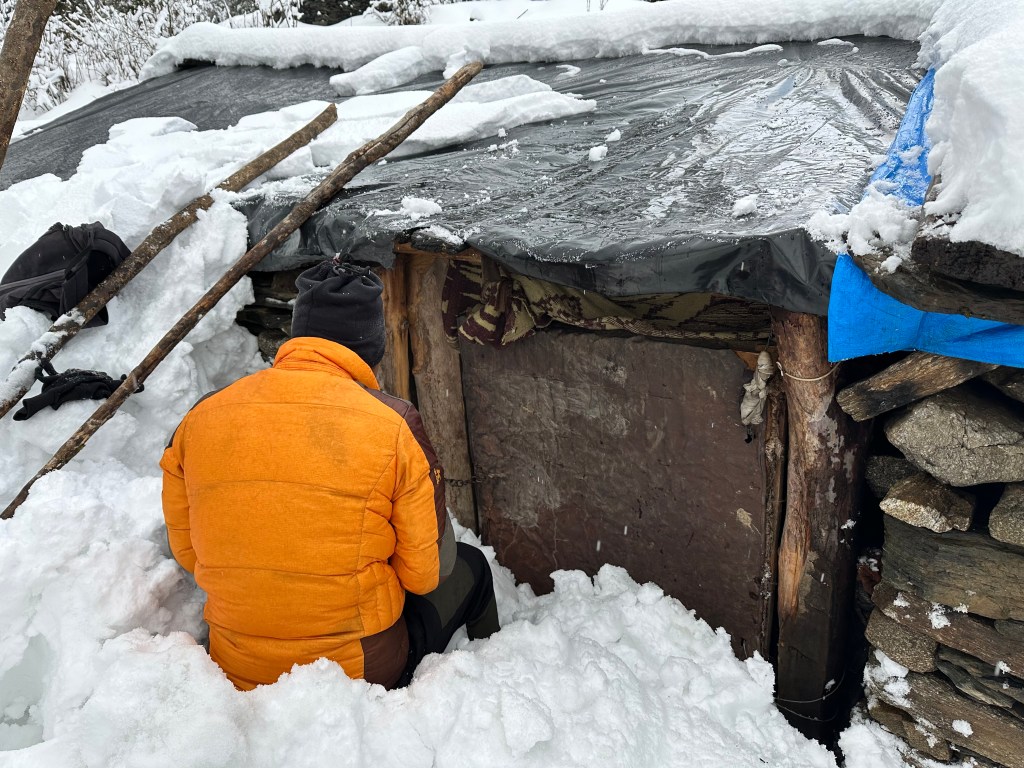
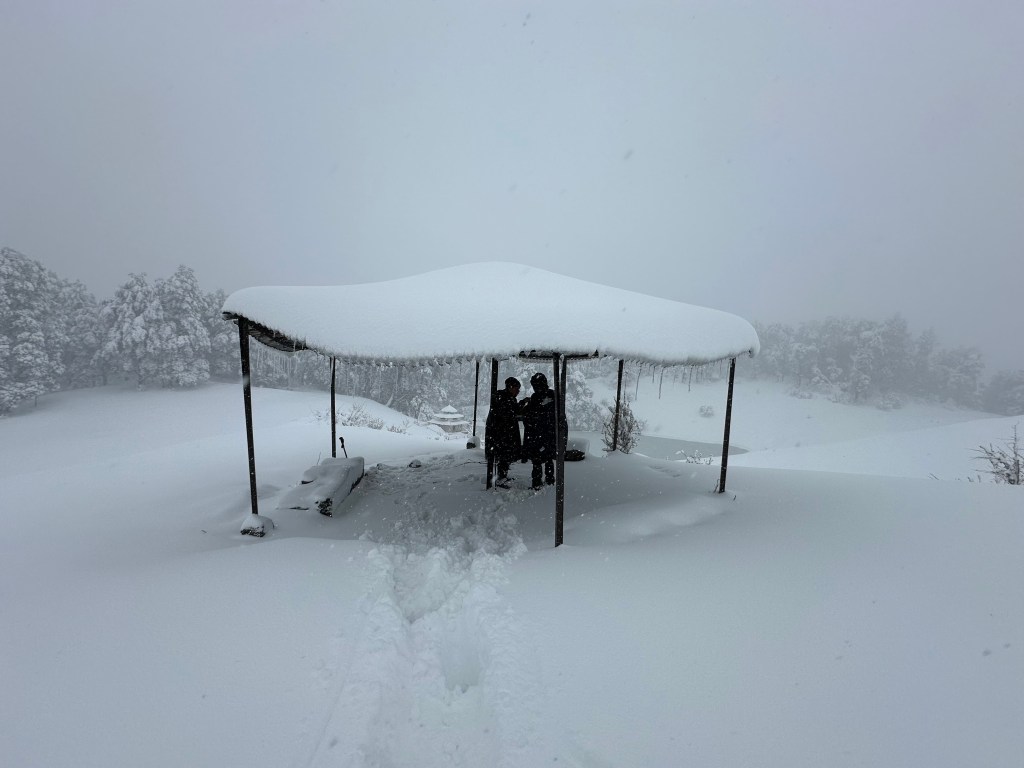
Midway through our hike, snowfall commenced, persisting for the majority of our journey there and back. Approaching the lake, about 500 meters prior, we reached the deserted Barnala campsite, our only company being ourselves on this trek. Our guide, who owned one of the abandoned structures, kindly opened it for us, providing a place to rest and to enjoy a steaming cup of chai amidst the heavy snowfall. Amidst lively conversation and the falling snow, it was a truly unique experience.
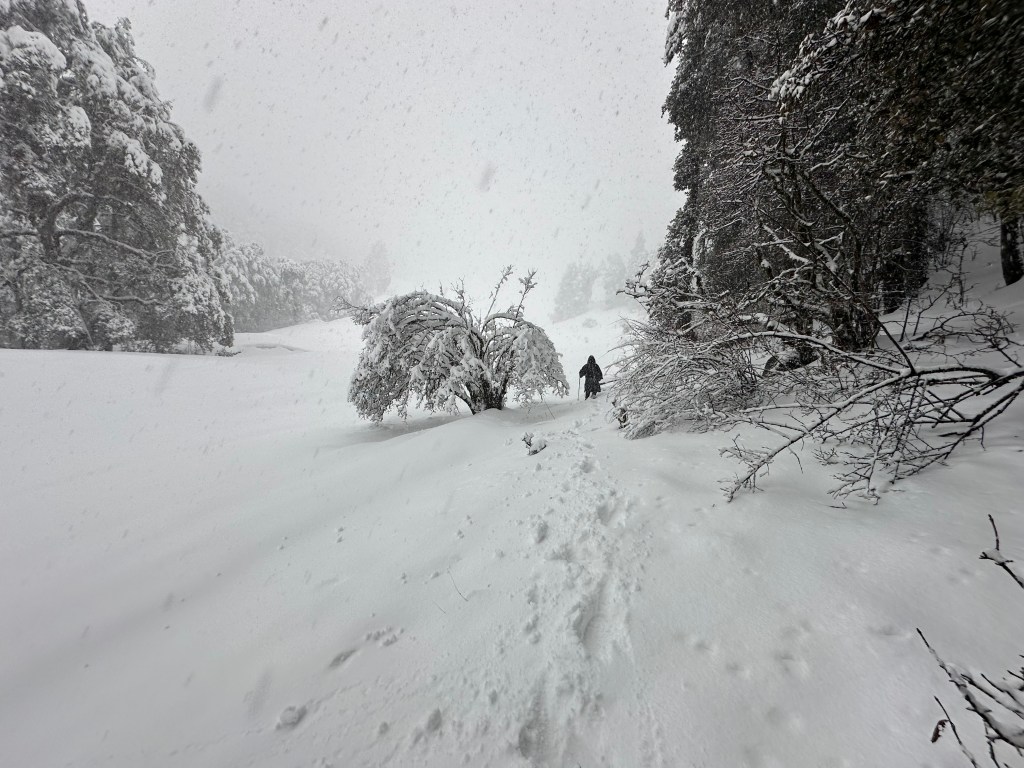
After a brief stopover, we resumed our trek, with the snowfall intensifying. Following the path forged by our experienced guide, the last 500 meters proved to be particularly challenging, taking us about an hour or perhaps a bit more to navigate. Upon reaching the lake, we were utterly captivated by its beauty. The landscape seemed otherworldly, blanketed in thick layers of snow. Complete silence had cloaked the surroundings, as if time had momentarily paused, with only the gentle murmur of the falling snow attempting to break the stillness of the scene.
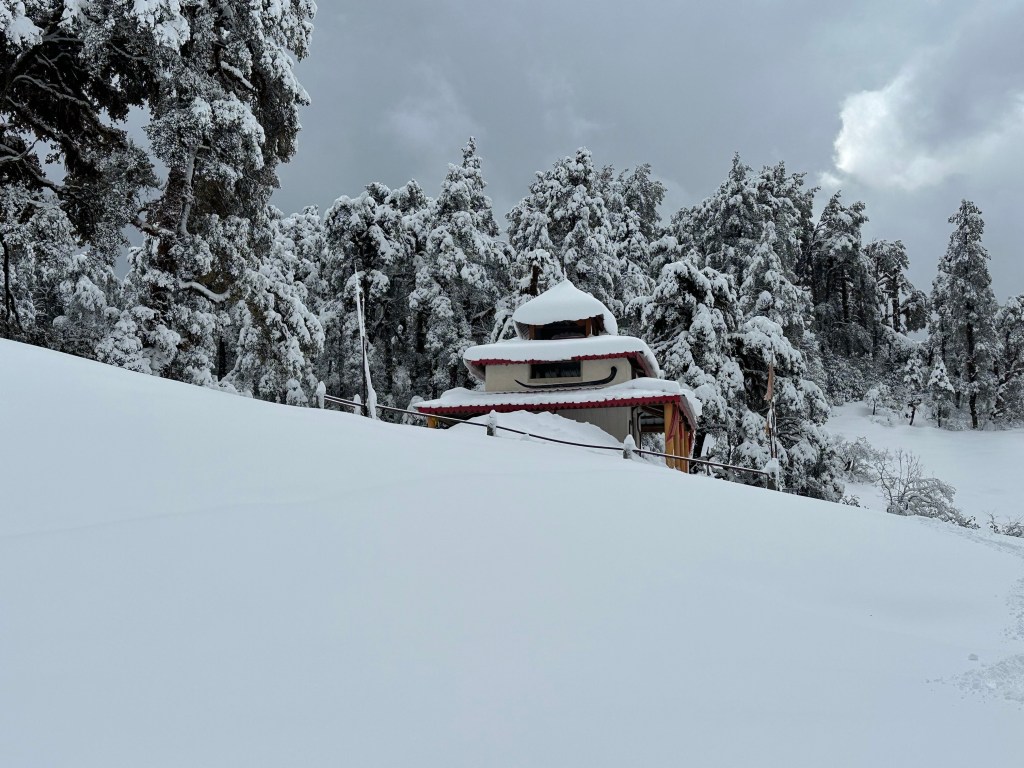
The Nag temple and the lake – A temple dedicated to Nag devta (serpent god) is situated alongside the lake. A fair is held in the month of May / June at this temple. The temple is highly revered by the locals in the area.
After immersing ourselves in the breathtaking scenery for a while, we decided to canter down the mountain. As we were returning, the clouds started to sheen away, giving way to the traces of blue sky and the bright sunshine. This only helped the landscape appear brighter and shinier. Somewhere on the slopes, a Monal released its melodic hums intermittently, while a group of Rufus Sibia gently perched on the snow-laden branches, seemingly enthralled by the transformed surroundings. While the upward journey took us about 3+ hours, on our return, we covered the same distance in half the time.
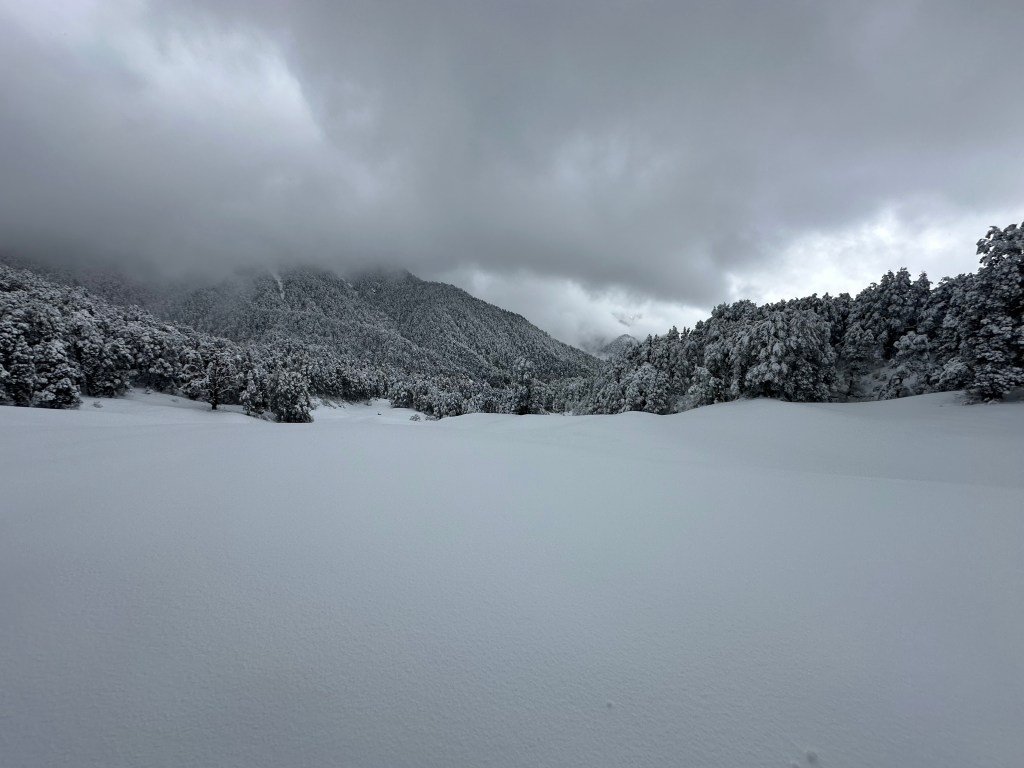
It’s a short trek by any means and I highly recommend it for amateurs and regulars. The scenery is indeed enthralling and had it been a clear day, we could have even witnessed some of the revered mountain peaks such as Gangotri, Srikantha, Draupadi ka Danda, etc in the near distance. This was my 2nd winter trek this year, and I truly enjoyed every bit of the experience.
I hope you enjoyed the post and I highly recommend this trail for those interested in exploring this lake, or even trekking to Dayara Bugyal, albeit by a different route than the mora popular trail via Raithal village.
Recommendation for a trek guide at Barsu – Raghu (+91-8958372583). We did this trek with him from Barsu village.
 Travel diaries from Uttarakhand