
Early last month, the weather changed for good. The plumes above, the ones with a dark grey hint, looked thick and heavy, carrying the clear conviction of bringing respite from the ruthless April heat that had blanketed the entire doon valley. Everyone welcomed its arrival. It poured heavily that day, intermittent lightening adding to the eerie look of the sky.
The next morning, I got up early and stepped out onto the balcony. Night was slowly giving way to the first rays of morning. The clouds had mostly receded, but in the distance, the lights scattered across the Mussoorie hills glistened in all their glory. It felt refreshing, both to me, and to the birds that had begun their daily roosting calls. I longed to go on a drive, to get closer to those mountains.
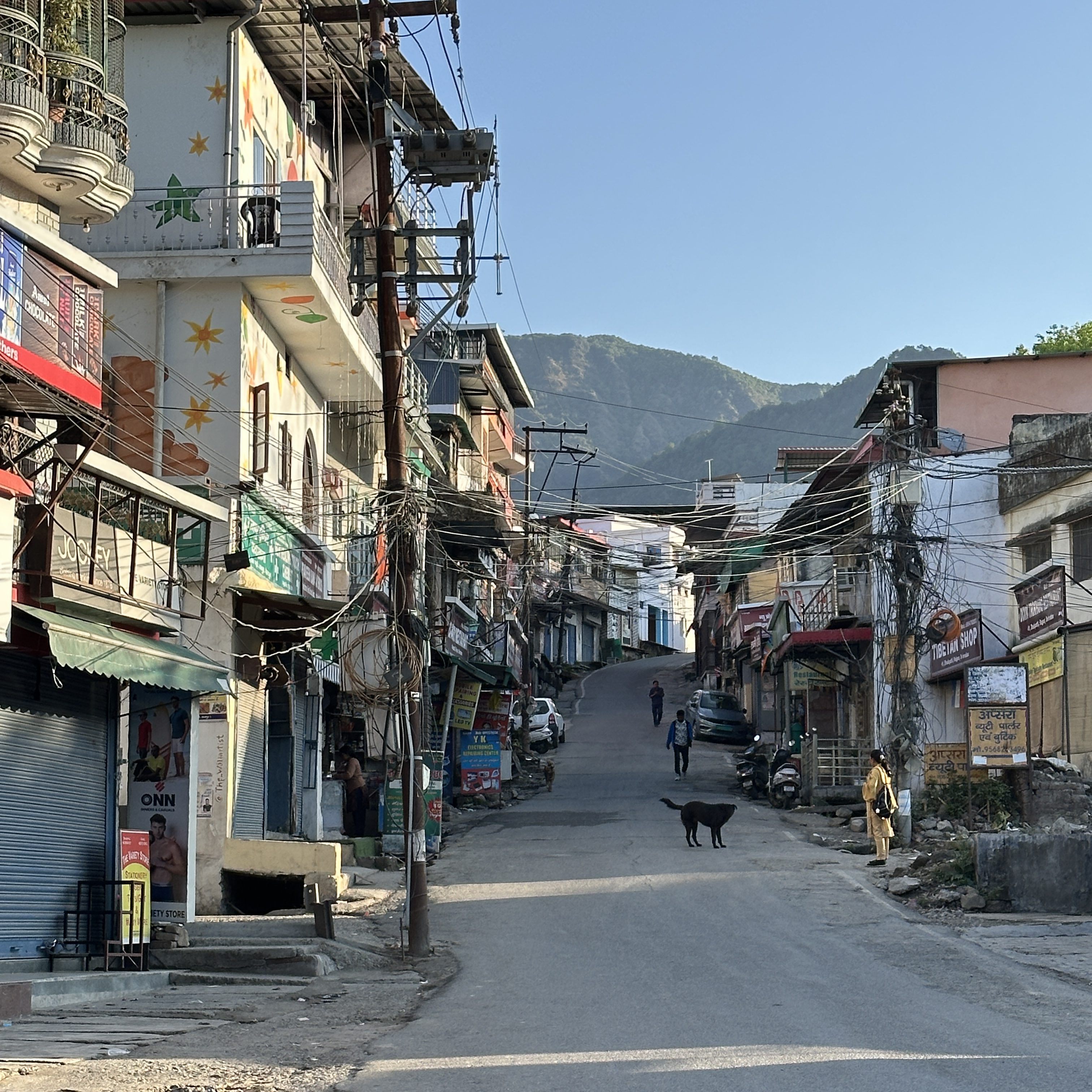
I zeroed-in on Rajpur town, once considered the outskirts of Dehradun. But with the ever-increasing encroaching of land to make way for concrete structures, fancy restaurants, shopping malls, and towering high-rises, it has now almost merged into the fabric of the sprawling Dehradun city. The sun was now hammering the mountain slopes, radiating a perfect glowing greenish tinge behind the stacked-up houses lining either side of the ascending Rajpur road.
The British (or rather, the East India company at the time), after defeating the Gorkhas in the Anglo-Gorkha war (1814), took over the valley. It was part of an agreement with the Raja of Tehri. Then, in 1823, Captain Frederick Young accidentally discovered Mussoorie while on a hunting trip. Since then, Mussoorie has thrived. But the only way to reach Mussoorie from Dehradun was through Rajpur, via the famous Jharipani trail. As a result, Rajpur village flourished, becoming a sought-after stop, a major point before the hill journey to Mussoorie.
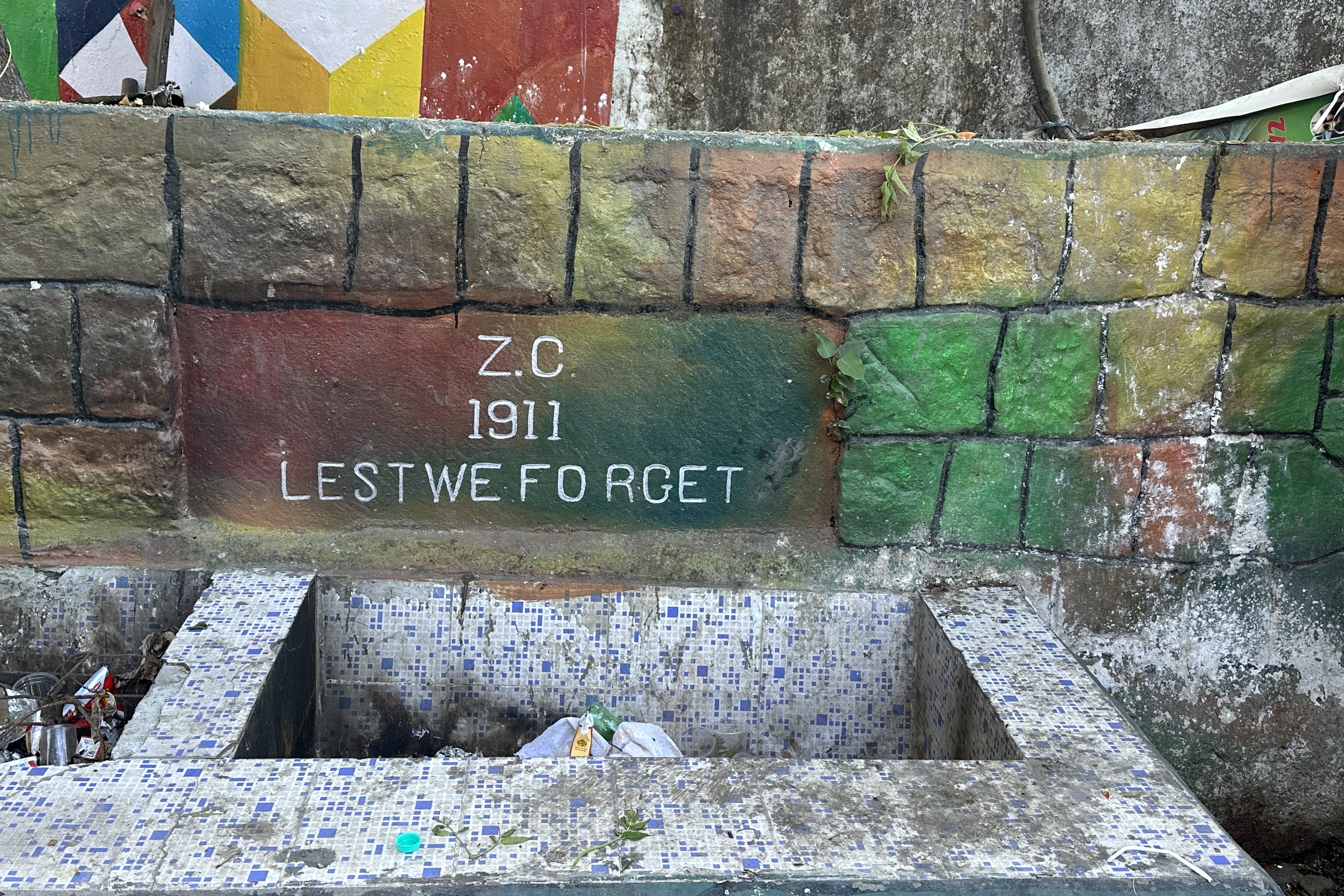
We can still find traces of its rich past. Just at the point where the road begins to ascend into the town, on your right, there’s a trough now used as a waste-bin. This once served as a fodder trough for horses and ponies. Horse-driven carts, palanquins, jhampanies, were the common modes of carrying British families to Mussoorie. I noticed a signage mentioning “Ghass Mandi” – a market area for buying ghass (grass). Why? Because horses, ponies needed it, and so a dedicated market came up to sell grass. I spotted another trough almost a kilometre ahead, where the ascending road flattens out, just a few hundred metres before the Shehenshahi ashram.
While Rajpur gained prominence in 1830s, it saw rapid transformation around 1870s. Why?
Even since the discovery of Mussoorie, the pictureseque hill station saw rampant construction. Buildings came up quickly, by the early 1830s, the whole Landour area had mushroomed, housing a convalescence depot where British soldiers recovered from injuries. The pristine climate of Landour suited them. A bustling market emerged due to the influx of these soldiers. Hotels followed, restaurants came up, and cinemas sprouted across the town.

Then, from the 1850s onward, railway infrastructure grew rapidly. By 1868, the Saharanpur railway station became operational. Travellers would deboard here and journey along the dirt road in horse-drawn carriages, trotting through the Doon valley to arrive at Rajpur. They typically rested a day before making the arduous, winding ascent via the Jharipani/Mussoorie bridle path. (If you wish to read more on this interesting trail, check out my dedicated post on it – click here).
In 1900, the Dehradun railway station finally became operational, and the influx of visitors continued to swell. Along the way, Rajpur town became a happening pit stop, abuzz with human activity, the neighing of horses, and the sweet, cool breeze drifting down from the hills, gently brushing the town’s outer boundary.


In 1959, His Holiness the Dalai Lama had to leave Tibet and seek refuge in India. After a demanding journey all the way from Lhasa, he eventually arrived in Mussoorie, where he and his entourage stayed for almost a year before making Mcleod Ganj (near Dharamshala in Himachal Pradesh) his permanent abode, where he continues to live and preach. Many Tibetans followed him, and settled in Mussoorie, Dehradun and nearby areas. Several Tibetans reside in Rajpur, which is also home to monasteries and a Tibetan school (established by His Holiness himself) that nurtures the new generation of Tibetans.


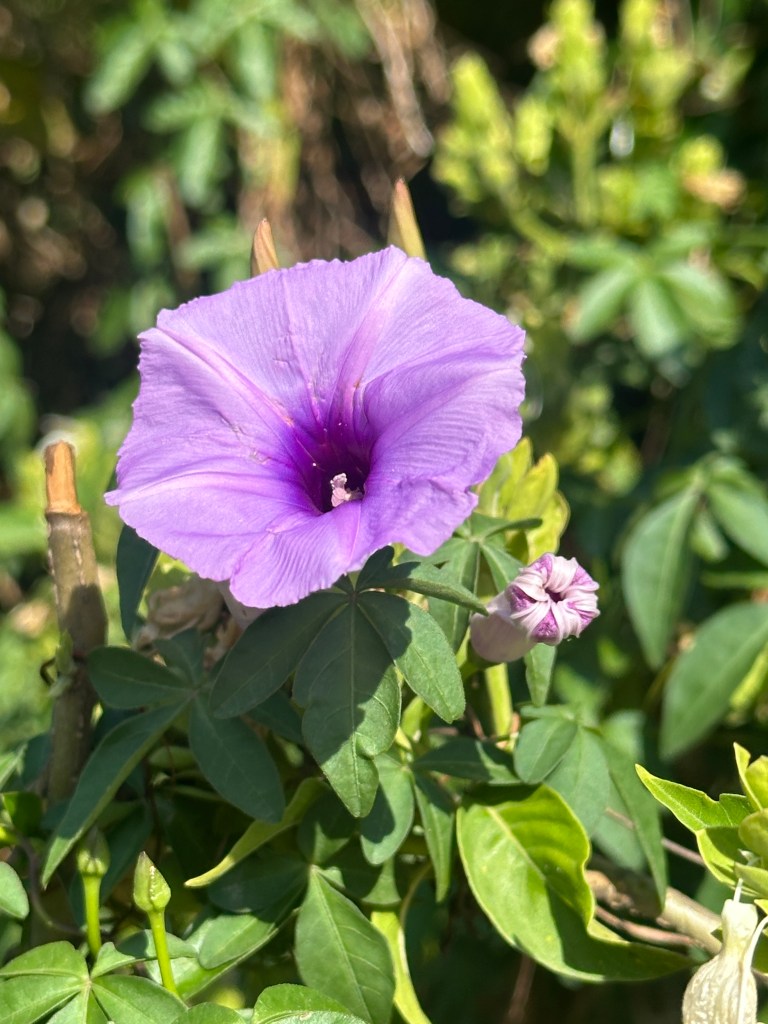
An early morning walk is such a delight – offering the chance to witness and absorb the rich history of Rajpur. After crossing the winding path that eventually leads to Shahenshahi ashram and all the way to Mussoorie (the old bridle path), a small detour takes you to the Baori Shiva temple, where, in 1890, Swami Vivekanand rested for about three weeks, before heading to the Himalayas. The area is dense with vegetation, and I was pleasantly surprised to find colourful flowers dotting the surroundings.
I completed a full circle, arriving back at the spot where I started the walk that morning. Business activity had picked up pace, and the sound of the rising shutters echoed from all directions. The summer sun was now overhead, and I knew it was time to wrap up this interesting walk – steeped in history, and drive back home to happily spend the rest of my Sunday.
We come to the end of this post, and I truly hope you enjoyed reading it.
I am listing here a few trails you can explore, along with links to my posts where I have already covered them in detail.
| Trail Name (Around Rajpur) | Link to my blog |
| Jharipani / Mussoorie trail | https://travelindevbhoomi.in/2022/07/25/monsoon-trek-from-dehradun-to-mussoorie-kipling-trail/ |
| Shikhar falls | https://travelindevbhoomi.in/2021/06/13/shikhar-falls-trek-dehradun/ |
| Sura Devi Temple Walk | https://travelindevbhoomi.in/2022/05/16/sura-devi-temple-nature-walk-dehradun/ |
 Travel diaries from Uttarakhand