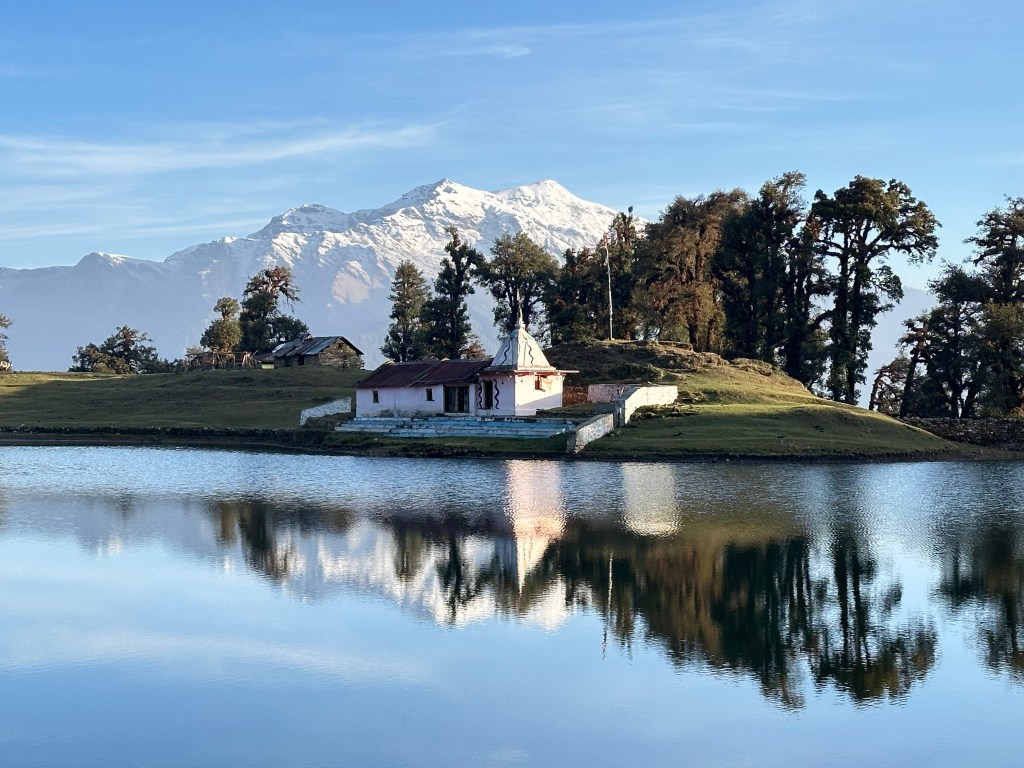
On June 3rd, a major tragedy occurred in the upper reaches of Uttarkashi district. Nine trekkers, while returning from the moderate-difficult grade trek named Sahastra Tal (perched at an altitude of roughly 15,000 feet), lost their lives after getting stuck in a snow blizzard compounded by heavy rains and strong winds that continued for hours.

At the end of April this year, I did a weekend trek to Mahasar Tal (click here) located in Tehri district. From there, on a bright sunny morning, I gazed at the higher peaks of Kush Kalyan and Sahastra Tal and was indeed smitten by their beauty. When this tragedy occurred, I felt personal grief and decided to understand the context better and gather some important aspects that we can keep in mind while undertaking a high-altitude trek.
Before we delve further into this tragedy, lets understand 2 aspects in detail.

A) Sahastra Tal – Sahastra Tal is a high-altitude trek and is accessed via a one-way walk of about 35 kms. It starts from a village called Malla, located near Bhatwari town in district Uttarkashi. The trek can also be attempted from Tehri side (Pinswar village) but given that major trek companies operate in Uttarkashi, this is the route mostly followed and the trail is better developed. Silla is the last village beyond Malla, and after that throughout the journey, one needs to stay in temporary camps / tents. So, this trek needs a lot of preparation, stocking of food rations, tents and camping material, perhaps requiring porter support as well as experienced guides with thorough understanding of the terrain. Anything above 12000-14000ft in the mountains, the situation can be unpredictable, and one needs to be fully prepared for the nature’s might.
B) Hypothermia – is a medical emergency when one’s body loses heat faster than it can produce it. This can lead to a dangerously low body temperature and cause symptoms such as intense shivering, confusion, slurred speech and drowsiness. If left untreated, it can lead to heart and respiratory failure, and eventual death.
This particular group had commenced their trek on 30th May and on 2nd June they arrived at the base camp (called Lamb Tal). From here, one attempts the summit climb to Sahastra Tal and returns to the base camp the same day. Everything was as per the plan for this group, and they a indeed made a successful summit climb. While returning, later in the afternoon, the nature unleashed its furry. It was a complete white out situation, caused by a heavy snowstorm and winds.
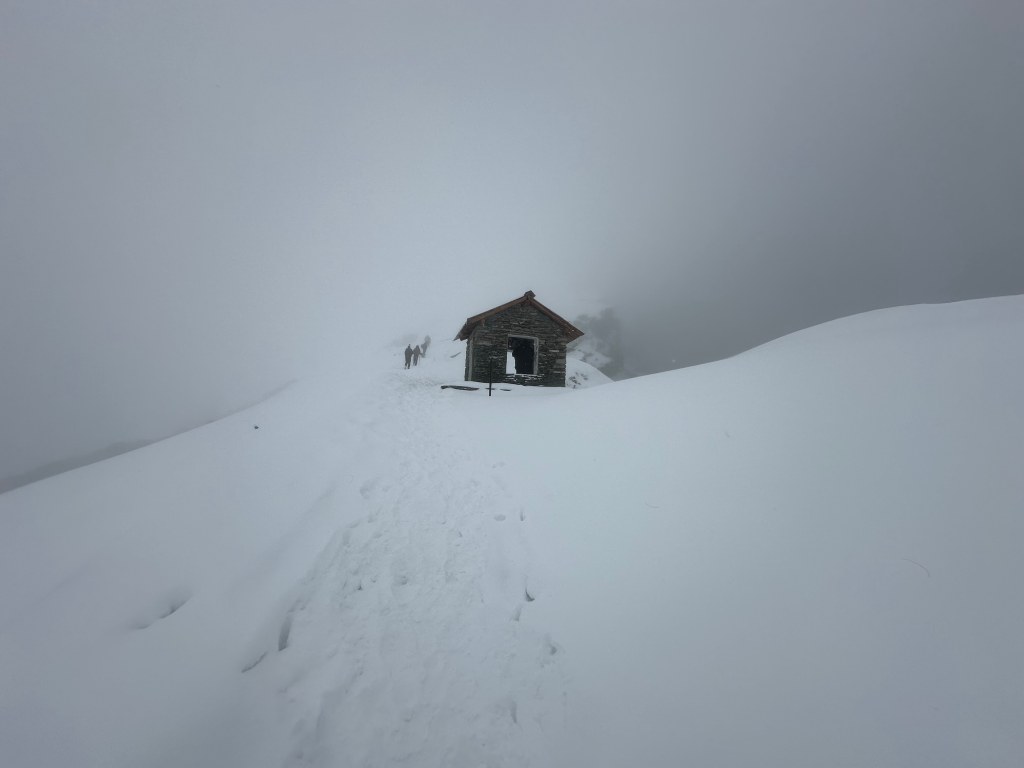
This is an unexpected situation, and one is certainly caught off guard. Earlier this year, in February, I went on a winter trek to Tungnath temple, which is nestled at roughly 12,000ft. And I faced a similar situation while returning to the base at Chopta. We encountered a snow blizzard and could not see anything ahead. It was a complete (and perhaps similar) whiteout situation. what did we do? firstly, we all huddled together, so that no person drifts away. We had our ponchos and were properly layered (clothed). We kept on walking albeit at a slower pace. The blizzard, fortunately, vanished away in a few minutes, the weather then cleared up, even the sun appeared above briefly, but then again, it started snowing. The weather at such an altitude is completely unpredictable.
In this case at Sahastra tal, the blizzard continued for hours and probably through the night. And the terrain was perhaps a bit treacherous. They were probably on a tricky ridge and one wrong step could have been fatal. It was an unfortunate episode and the information what I read on the internet says that the team was well experienced, in proper health and all safety aspects were kept into consideration and duly followed.
Some of the key things that we may keep in mind during long high altitude hikes include;
- It is important to know the weather conditions before planning a long trek (2+ day treks). Any anticipated deviation in the weather should serve as a warning.
- While on such long treks, taking adequate supplies of food rations is essential. Keeping other items such as dry fruits, protein bars, and candies is equally important. They should always be part of your backpack. One should be properly clothed in multiple layers. You can get vests / trousers that are suited for snowy conditions from leading stores. Sometimes trekkers use normal clothes which do not work well for wet/snowy conditions.
- Often, while summitting from the base camp, we tend to leave most of our stuff behind, such as sleeping bag, may be an extra jacket, and other stuff. If you have trekked with a 50-60 Litre bagpack all throughout, you may carry it all the way up to the summit climb. You never know what you may require in emergency situations.
- Always ensure that the trek company you chose is a reliable one and has demonstrated experience of undertaking the trek. Read their reviews thoroughly and the experience of their trek leaders. I usually see that we are driven mostly by the cheapest package available in the market. This is a high-altitude adventure, and one should not always be driven by the cheapest option.
- An insulated water bottle having hot water. This is a must and should be consumed in small sips and saved for emergency situations. The experienced trek guides usually know where we can find the water streams while undertaking the trek.
- Inform your close friends or relatives about your itinerary. These days, usually one needs to register themselves at the local authority before embarking on a trek. One should ensure this before they commence on the trek. The trek guides/company will facilitate this for you.
- When stuck in a snow blizzard, huddle together to ensure no one drifts away. One should find an enclosed space, or a tent, or a rock to provide shelter. If nothing is available, you can try creating an enclosure with snow. Do as much as possible to avoid heat outflow from your body which has to be kept at normal temperature to avoid situations of Hypothermia.
- If in a large group, the trek captain or leader has to provide a proper direction and be at the front. And there should be a sweep who will be the last person in the group, to ensure no one is left behind.
- On these long and high-altitude treks, physical fitness is of utmost important. Everyone has to be fit to ensure the trek is successful. Therefore, eating nutritious food is important and health checkups to be done to ensure everyone is fit and fine.
Sahastra tal, a stunning lake or perhaps a collection of seven lakes, is nestled between the Bhagirathi and Bhilangana valleys. From this vantage point, one can admire the grandeur of the Garhwal Himalayas, including peaks like Gangotri.
Through this post, I pay my tribute to the courageous hikers who tragically lost their lives. I now increasingly believe that it is not we who attempt to conquer the mountains and explore the Himalayas; rather, it is the mountains that invite us to explore them. We must approach them with respect, for they can unleash their power at their own discretion.
Note: The details of this tragic incident have been gathered from the internet and may not be entirely accurate. Readers are encouraged to verify the facts themselves if they wish to understand more about this recent tragedy.
 Travel diaries from Uttarakhand
detailed advise & guidance for high altitude trek by an experienced trekker ..
LikeLiked by 1 person