
Jaunsar, situated between the Tons and Yamuna rivers, stands as the westernmost region of Uttarakhand, steeped in rich history and folklore. It is inhabited by the Jaunsari people, recognized as a scheduled tribe in the state. It predominantly encompasses the Chakrata and Kalsi blocks within the Dehradun district.
During a weekend in early April, I made the decision to explore the region, and before long, I found myself on the road, feeling the refreshing chill of the early morning air tantalizing my skin. I started from Dehradun early in the morning and in an hour’s time I arrived at Vikasnagar. I continued the drive and crossed over the Yamuna bridge and zoomed into Kalsi town. Just then the sun appeared above the hills around, and it spattered its virgin rays in all directions. In an instant, it lit up the entire landscape. The vast green fields began to glow in the morning light, while the gushing waters of Yamuna shimmered in reflection. The beautiful scene filled me with a sense of enthusiasm as I embarked on my journey into the unknown hills beyond Kalsi.

Unlike typical hill stations, Jaunsar remains largely untouched by the human-led destruction. Of the many reasons, 2 prominent reasons come to the fore. A) The area houses military establishments and therefore rampant construction may not be allowed. B) As this is a tribal area, the land reforms act (1950) prohibits any person belonging to a scheduled tribe from transferring his/her land to any person not belonging to the ST community by way of sale, gift, mortgage or lease.
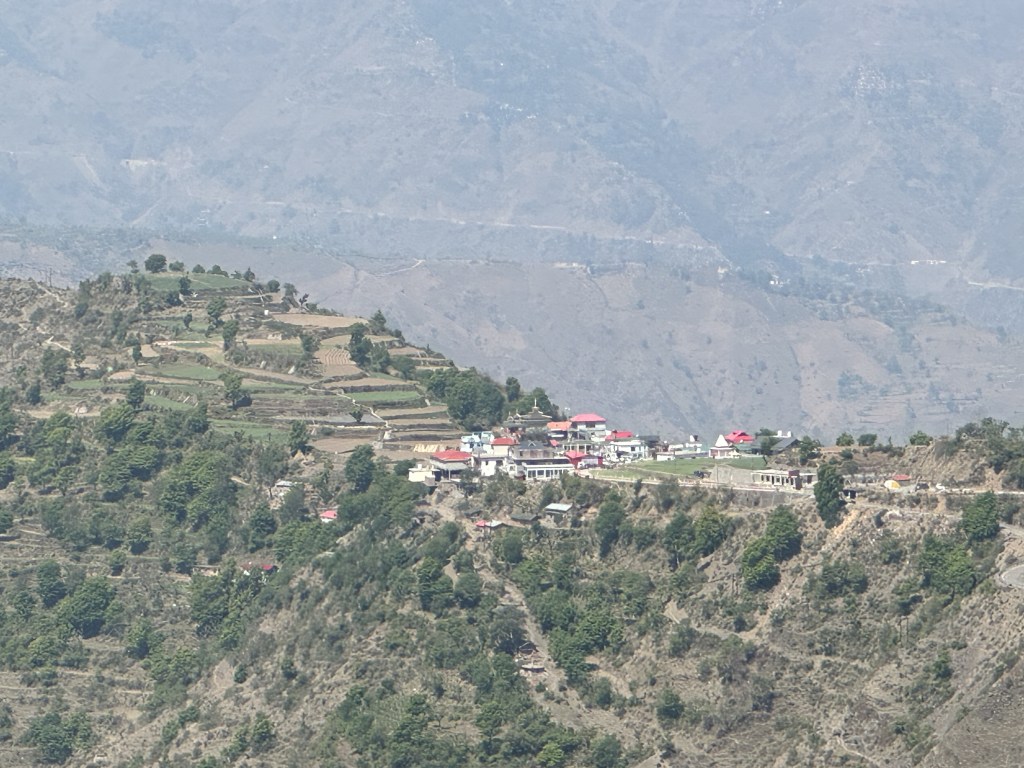
As I ascended the mountain on the winding road towards Sahiya, the first major town about 19 kilometers ahead, this aspect became quite evident. The mountains were concealed in dense foliage, with only a few scattered houses dotting their slopes. The road was well-maintained and typically free from heavy traffic. At Sahiya, I took the narrow (but well built) road to Dasson, about 30 kms from Sahiya.
Why did I choose to travel to Dasson?
This region and its inhabitants are deeply devoted to Mahasu Devta, a local deity who manifests in quadruple form as the four brothers: Botha Mahasu , Bashik Mahasu , Pavashi Mahasu and Chalda Mahasu, arranged in descending order of age.
The renowned Mahasu temple in Hanol, a remote town in Dehradun district, bordering Himachal Pradesh, is revered by people from far and wide. Legend has it that Yudhishtir chose this place, captivated by its enchanting beauty.
Among the four brothers, Chalda Maharaj (or Mahasu) is the youngest and constantly on the move since ancient times. Temples dedicated to him host his presence for varying durations, from a few months to years. Presently, his palanquin is stationed at Dasson village, coinciding with the Bissu festival, a significant time to visit.

Chalda Maharaj, known for his perpetual wanderings, is said to typically visit each temple once every 12 years. However, on this occasion, he graced Dasson with his presence after an interval of 40 years. Temples dedicated to Chalda Maharaj are scattered across the Jaunsar region and extend into the neighbouring state of Himachal Pradesh, particularly in Sirmour and Shimla districts, situated on the opposite bank of the Tons River.
Prior to his arrival in Dasson, Chalda Maharaj resided in Samalta Village for approximately 18 months, marking his return after an absence of nearly 67 years. The profound influence and unwavering belief that the Jaunsari people hold for Mahasu Devta are truly remarkable.
A bit about the Bissu festival
Lasting approximately a week and coinciding with Baisakhi, the people of the Jaunsar region express their gratitude to God for a fruitful harvest season through the celebration of Bissu. Both men and women participate in singing and dancing while donning vibrant and intricate traditional attire. Homes are embellished with freshly picked Rhododendron flowers, locally known as Buransh, adding to the festival ambience and spirit. Furthermore, fairs (mela), are organized at various locations within the area, often featuring archery competitions as part of the festivities.
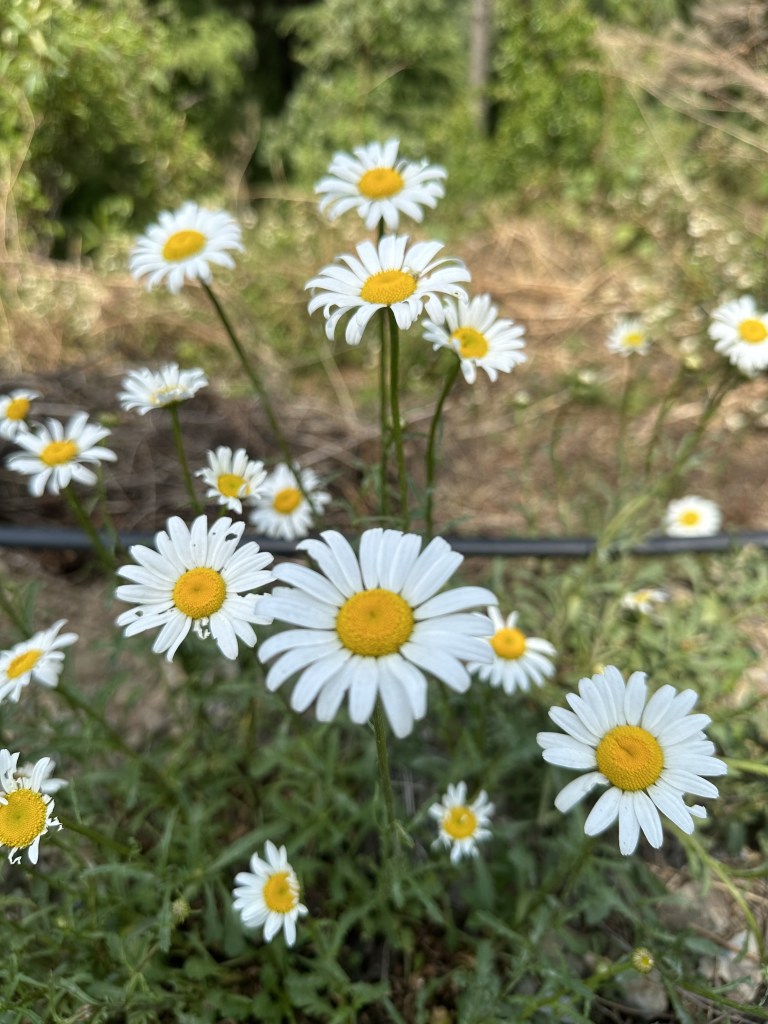
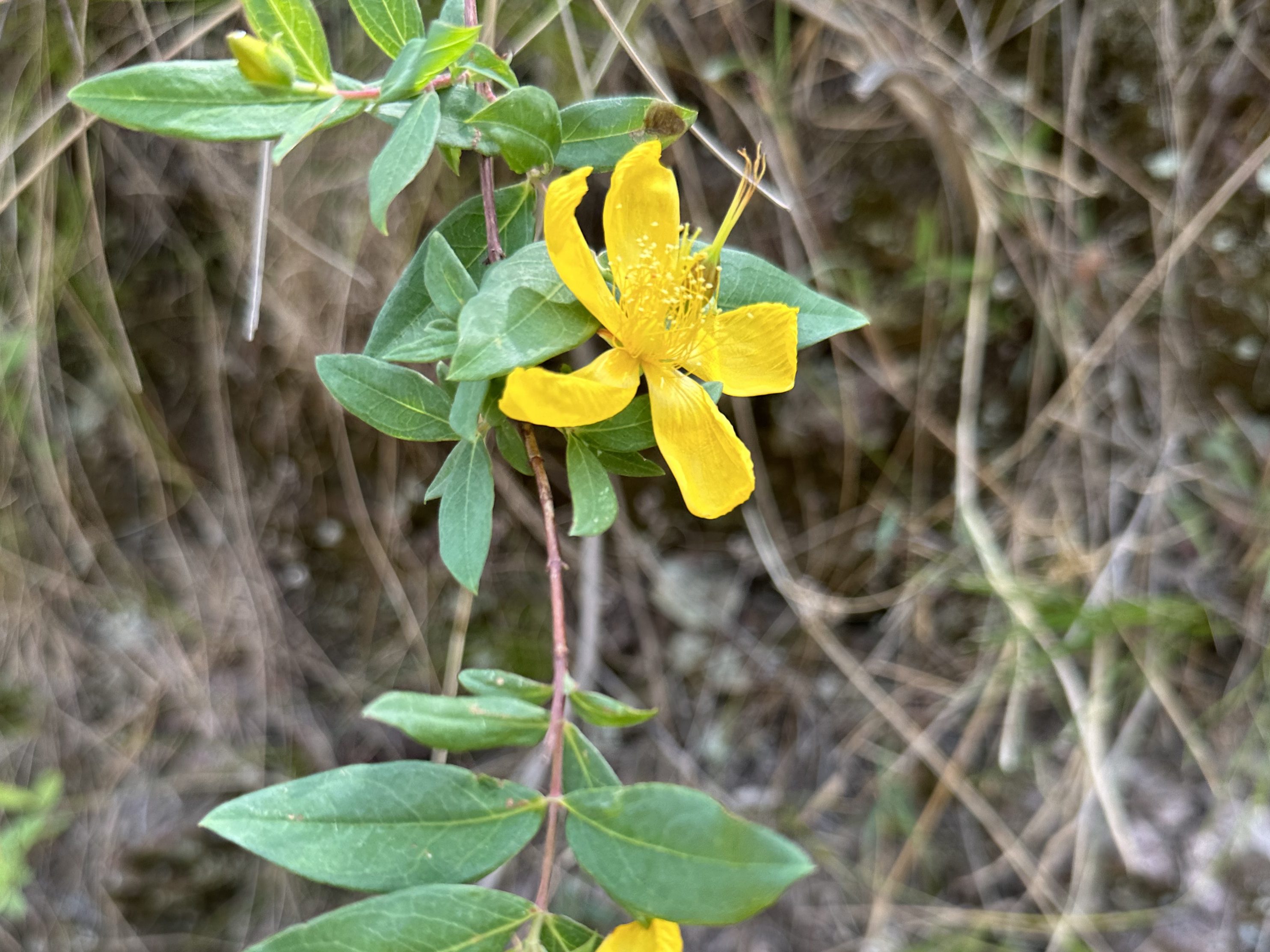
As it was springtime, the entire landscape was teeming with colourful and vibrant flowers, as if adding the final strokes to the painter’s canvas. While navigating the road on my return journey from Dasson to Chakrata, I found myself reverting to a childlike state. Frequently halting my car, I indulged in moments of wonder, absorbing the myriad hues and the sweet scents reverberating through the air.
Activities that I engaged in while in Chakrata:
Nestled at an altitude of roughly 7000 ft, Chakrata enjoys a consistently cool climate year-round. Its tranquil atmosphere is preserved by the numerous military installations dotting the landscape, minimizing the urban noise and structures. Lush greenery thrives here. Truly a delightful haven.
Places I explored here ?
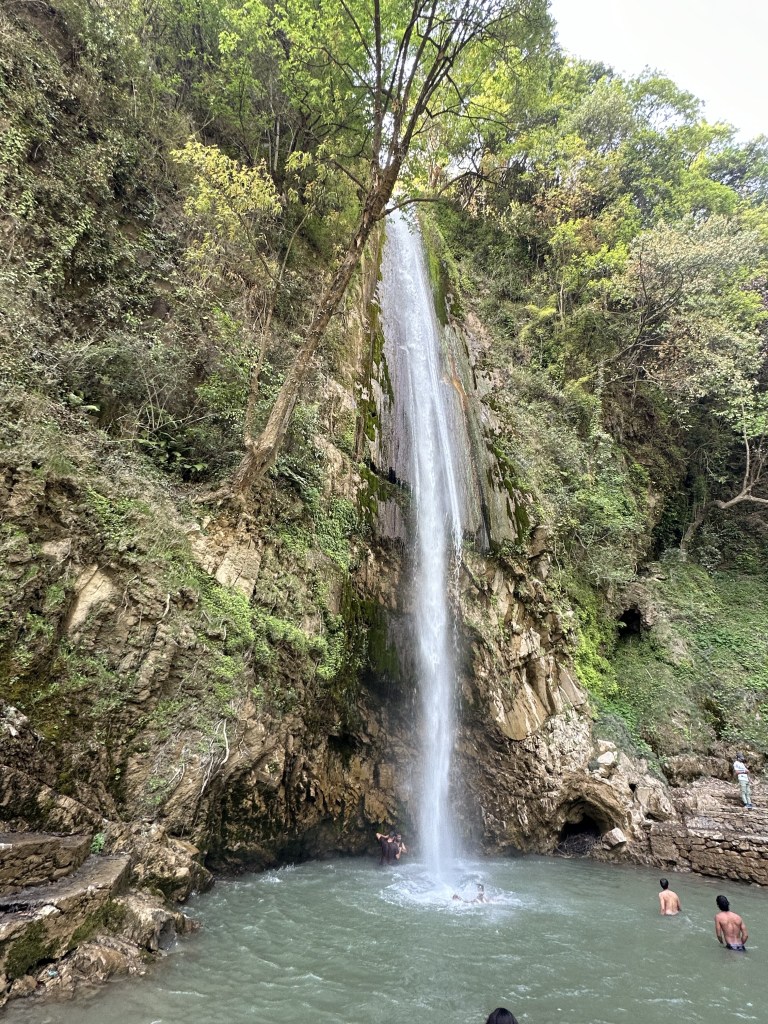
- Tiger Falls – A breathtaking waterfall well worth a visit during your time in Chakrata. Located just a 45-minute drive from Chakrata town, roughly 19 kms away.
- Chakrata Bazar – Despite limited civilian infrastructure due to the military presence, a small market still exists, waiting to be discovered.
- Sunrise/Sunset point – Situated not far from Chakrata town, this point offers a panoramic 360-degree view. Witness the mesmerizing sunrise/sunset and the timeless silhouette of the surrounding mountains.

Accommodation options in Chakrata?
Most hotels are situated either along Lakhamandal Road or Yamuna Bridge/Mussoorie Road. During our stay, I chose The Hosteller, located in Purodi village, approximately 7 kms from Chakrata town on the Yamuna Bridge/Mussoorie road.
The next day, I rose early and hiked to the mountaintop to enjoy the morning view. Despite some clouds and scattered rainfall, the landscape appeared lush and rejuvenating, with abundant bird activity.

It was then time to begin our journey back to Dehradun, descending the mountains via a different route that took us through Samalta village. Here, I visited the Chalda Maharaj temple, where his palanquin had rested before moving to Dasson. I had the pleasure of meeting some friendly villagers who warmly welcomed us.

As the sun began its descent, casting dull orange hues across the scattered clouds, I made our way back to Dehradun, well before nightfall, ready to resume our usual routine of a working Monday.
I hope you enjoyed reading the post.
 Travel diaries from Uttarakhand